NC auditor finds widespread oversight failures, questionable spending in Town of Cary
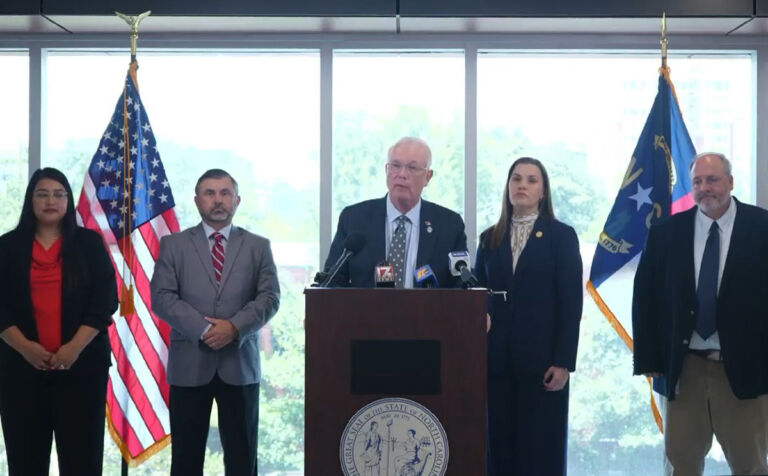
A North Carolina State Auditor investigation into the Town of Cary found widespread failures in financial oversight, questionable taxpayer-funded spending, and a culture that discouraged employees from questioning leadership under former Town Manager Sean Stegall.
The investigative report, released Thursday by State Auditor Dave Boliek, examined Cary’s procurement card program, council expenditures, financial reporting practices, and the town’s overall fiscal management, after receiving complaints alleging financial misconduct by Stegall. Auditors also interviewed current and former council members and town employees, and reviewed thousands of government credit card transactions.
“The spending exposed in the Town of Cary must be addressed with greater oversight and accountability,” Boliek said. “Public dollars being thrown around carelessly while taxes are being raised only creates distrust in government. This report brings spending to light and shows a true accounting of where tax dollars go in Cary. The public has a right to be frustrated, and hopefully this will result in much-needed financial restraint and discipline in the future.”
The report highlights that Cary issued far more government purchasing cards than similar sized municipalities, maintained outdated procurement policies, failed to consistently document purchases, and allowed spending practices that auditors said often lacked a clear government purpose.
As of late 2025, the town had issued 828 procurement cards, which accounts for about 62% of their employees. Similar sized municipalities across North Carolina average around 16%. Between January 2024 and December 2025, employees clocked 60,591 purchasing card transactions, totaling $24.2 million.

Among the transactions highlighted by auditors were $37,301 in graduate tuition paid on behalf of Councilmember Lori Bush before she later reimbursed the town, $65,653 paid to a ghostwriter for a book about Stegall, a $3,419 penthouse hotel stay by Stegall, and more than $86,000 spent on video production for the town’s 2024 retreat in Wilmington. The video included a surprise dance performance by town staff. Then there was an additional $35,000 for a documentary that told the story of how that video was produced.
“That $86,000 was town staff approved, so the council wasn’t aware that the town staff was spending the $86,000,” said Boliek during a Thursday press conference. “We’ll let you draw your own conclusions about whether that’s a return on investment of taxpayer dollars.”
The report also questioned high-end meals, transportation expenses, Ray-Ban sunglasses for council members, and more than $100,000 in transactions that either lacked itemized receipts or had no supporting receipts at all.
Brian Balfour, senior vice president of research at the John Locke Foundation, said the Cary audit reflects a pattern of government officials misusing taxpayer dollars.
“This is an all-too-common story: government officials and bureaucrats abusing taxpayer dollars,” Balfour told Carolina Journal. “No level of government is exempt from this corruption. Far too many in government view taxpayer dollars as a pot of money at their disposal, to be used for personal gain, with no respect to the fact that tax dollars were taken from the paychecks of hard-working people trying to make ends meet.”
Balfour said the report illustrates why stronger oversight is necessary but argued the larger solution is reducing the size and scope of government.


“Fortunately the auditor discovered this abuse, but how much more fraud and abuse is occurring with taxpayer dollars in local and state governments, let alone the federal government?” asked Balfour. “More transparency and oversight can help, but this underscores the urgent need to reduce the size and scope of government to its core function of protecting the rights of citizens. The smaller the government, the less opportunity for fraudulent and abusive wastes of taxpayer dollars there will be.”
Auditors also found the town’s spending outpaced revenue growth in recent years. While revenues increased by $81 million between fiscal years 2021 and 2025, expenditures grew by nearly $100 million, resulting in operating deficits in fiscal years 2023 and 2024. Using year-end adjusted budgets, the Auditor’s Office concluded Cary’s fund balance fell below the town’s minimum policy threshold during both years.

The audit points to broader management and oversight failures within Cary’s government. Auditors found the town’s procurement card policies had not been substantially updated since 2009, financial reporting to elected officials was inadequate, and the Town Council often delegated major financial decisions to a small group of administrators while receiving limited information about the town’s overall fiscal condition.
The report also describes a workplace culture in which employees were reluctant to question leadership. Multiple employees reported intimidation and pressure under Stegall, while the town clerk told investigators that employees “could never tell [him] no.” Auditors concluded that financial decision-making became concentrated within the town manager’s office, limiting transparency for both employees and elected officials.
The Town Council placed Stegall on paid administrative leave in November 2025 after a public records request showed a series of major expenditures that several council members, including the mayor, said they were unaware of. Stegall then went on to resign one month later.
Multiple criminal investigations remain ongoing involving the Wake County District Attorney’s Office and the State Bureau of Investigation. Boliek said his office continues to work closely with both agencies as the investigations move forward.
“The criminal investigation continues to move forward because this office, along with, the Wake County District Attorney’s Office and the State Bureau of Investigation is really keen on accountability and holding people accountable for actions,” said Boliek.
The report notes the State Auditor’s Office has referred certain matters to the Wake County District Attorney and the State Bureau of Investigation but declined to identify those transactions publicly to avoid compromising any potential criminal investigation.
The audit recommends tightening procurement card controls, requiring itemized receipts for all purchases, improving financial reporting to the Town Council, adopting clearer reimbursement policies, establishing council approval thresholds for major expenditures, and strengthening oversight of the town’s financial condition.
“NC auditor finds widespread oversight failures, questionable spending in Town of Cary” was originally published on www.carolinajournal.com.

![[WBT107.9FM] app promo graphics 2025](https://wbt.com/wp-content/uploads/sites/84/2025/12/17653898024341.jpg?quality=80&strip=all&w=150&crop=0,0,100,150px)