The lesson I learned at Connemara, Carl Sandburg’s NC estate
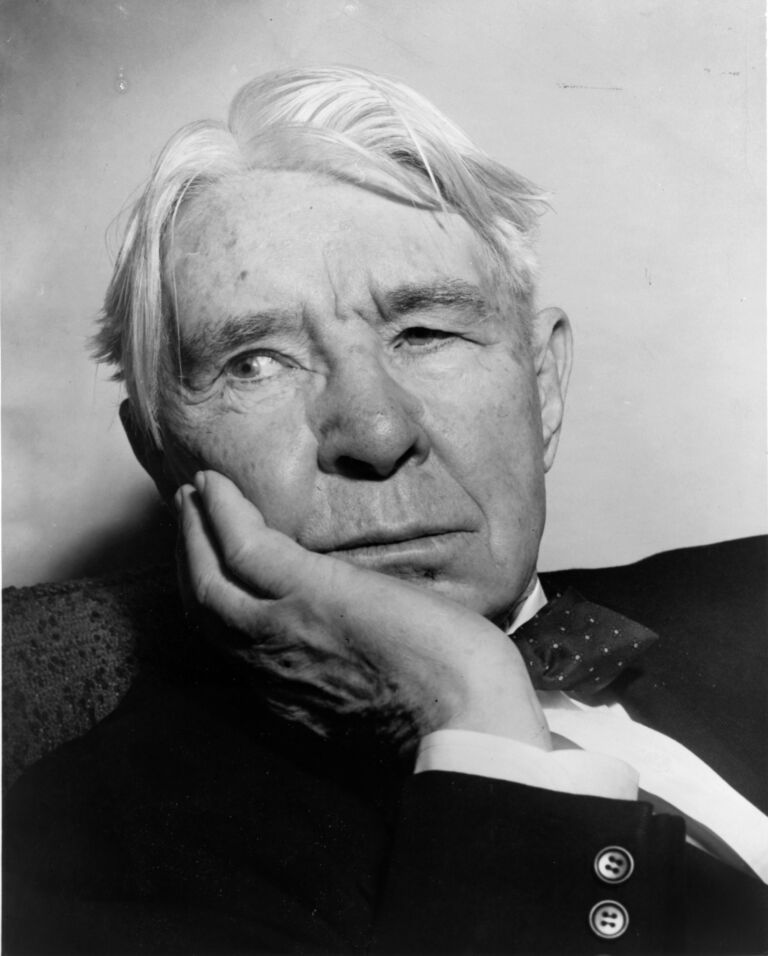
At Exit 53 on I-26 in Henderson County, there’s a small brown highway marker that points toward Connemara. That is the Flat Rock estate where Carl Sandburg spent his final 22 years. He died there on July 22, 1967.
By the time he arrived, in 1945, Sandburg didn’t have anything left to prove. He was 67, a three-time Pulitzer Prize winner, and the man who had penned the life of Lincoln. North Carolina eventually named him an honorary ambassador of a state he wasn’t even born in.
The estate’s architectural flair and manicured landscape certainly seemed fitting for a writer of his stature. The Greek Revival house, with stately Doric columns, ivy-covered stone walls, and verdant rolling hills, was originally built to flaunt wealth and status. It was intended to signal strong ties to the regional social class.
But the part of the estate that most aptly explains who Carl Sandburg was isn’t the house; it is something far more profound. If you walk about 200 feet behind it, you’ll find a rough slab of granite with a plain wooden bentwood chair sitting on it. No desk, no fancy view, and definitely no audience. That is where Sandburg went to work.
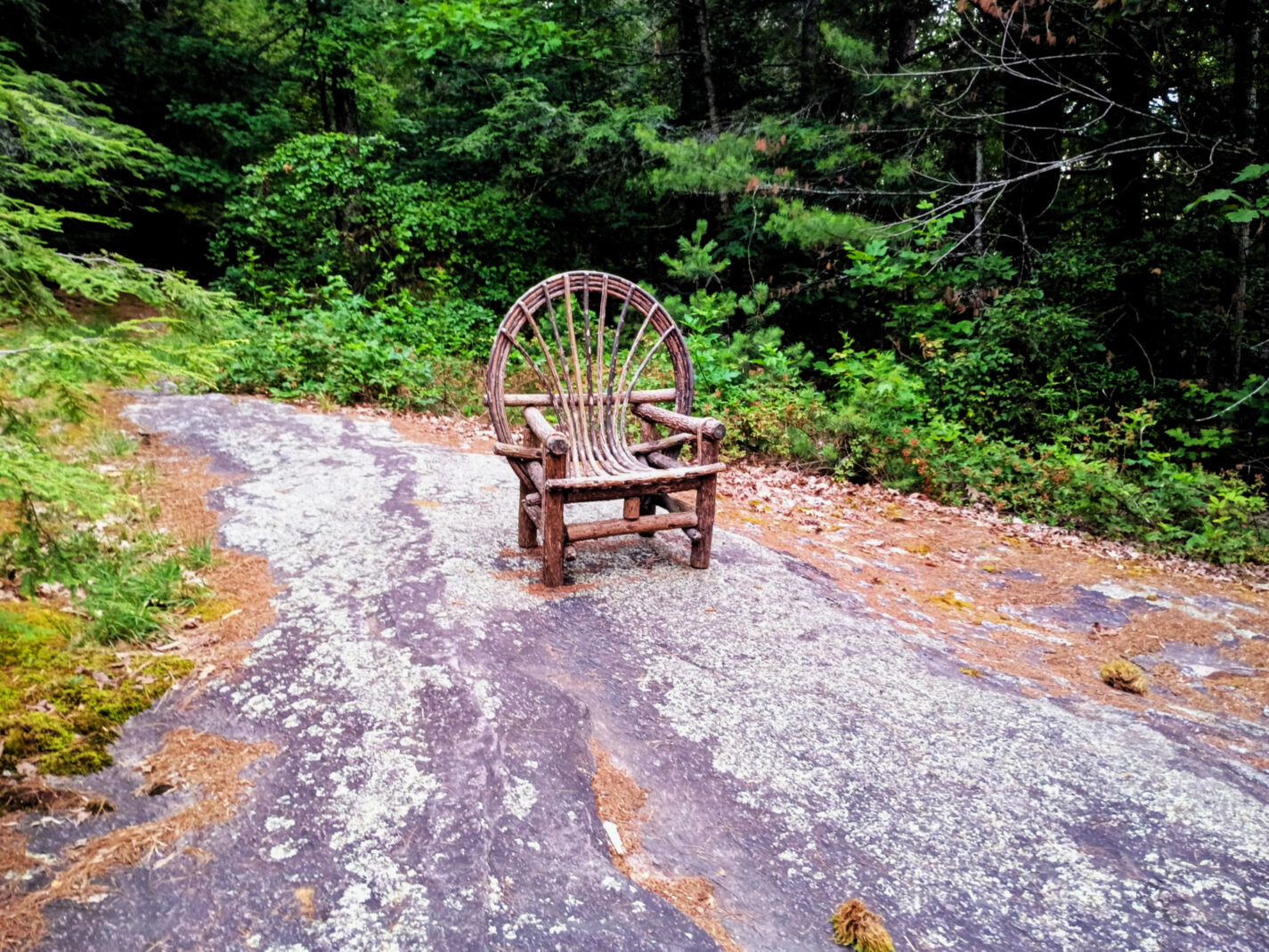
That rustic, weathered chair tells a story the house never could.
It suggests that substantial achievement and mere showmanship are two very different things. Sandburg likely enjoyed the fame and admiration from fans, but he didn’t let it become the center of his life. None of that compared to the work itself. Long before we were all checking screens for likes, he had already figured out a much quieter way to measure success.
The history of Connemara makes that choice even more striking.
Originally called Rock Hill, the estate was owned in the 1830s by Christopher Memminger, a Charleston lawyer who later became the Confederacy’s first secretary of the treasury. Enslaved people built it. It was designed for aristocratic leisure, a stage where opulence was on full display.
But Sandburg neither bought into that nor wanted it.
I don’t know one thing of substance that was ever produced at Rock Hill during that era. Sandburg, however, turned it into a working dairy farm. His wife Lilian’s prize-winning goats became nearly as famous as he. One champion goat produced 5,750 pounds of milk throughout an official 305-day record-keeping cycle. As the granddaughter of a man who spent his life dedicated to farming and agriculture, I can tell you that this was no easy feat; it was almost unheard of back then.
The land stayed the same, but the man who occupied the house came from a wholly different cloth.
That transformation reflected Sandburg’s own life. He wasn’t born into a grand house. His father was an illiterate railroad worker, and his mother stitched his diapers from Pillsbury flour sacks. He left home at 19 with $3.25, a pipe, and a pocket mirror. He laid bricks and delivered milk on frigid mornings long before anyone knew his name. He slept in hobo camps and rode freight trains. Success came eventually, but his unrelenting work ethic had already shaped his identity long before he arrived at Flat Rock.
By February 1964, not much had changed. The unrelenting work ethic of his 19-year-old self was still deeply ingrained when a young Bob Dylan showed up unannounced at Sandburg’s door, already on his way to becoming a cultural icon. Most people in Sandburg’s position would have made a whole afternoon of it. But Sandburg gave him 20 minutes, took a copy of “The Times They Are A-Changin’,” and politely said he had work to do.
Some may think this was a cold shoulder. But he had already decided what fame could and could not interrupt.
I’ve walked the paths at Connemara many times. I’ve seen the elegant and gracious architectural details, the thousands of books, and the old Zenith radio, and those are all memorable. But nothing has hit me quite like that chair on the rock. It isn’t impressive or even comfortable. It just sits there quietly, in the middle of a slab behind one of the state’s most famous houses.
The popularity of social media, followers, and “likes” today suggests that we tend to measure our lives, not by the intrinsic value of our work, but by how many on the outside are watching and admiring. That chair offers a far more insightful perspective. It reminds us that work doesn’t need an audience, and the best kind of satisfaction happens when no one is applauding.
The highway marker at Exit 53 in Henderson County shows you how to find the Carl Sandburg Home. But it won’t show you the man. For that, you have to walk past the stately columns to an old weathered chair on a piece of granite. There, away from all the prestige, you’ll find the real Poet of the People: a man who understood that the work always matters more than the applause.
“The lesson I learned at Connemara, Carl Sandburg’s NC estate” was originally published on www.carolinajournal.com.
![[WBT107.9FM] app promo graphics 2025](https://wbt.com/wp-content/uploads/sites/84/2025/12/17653898024341.jpg?quality=80&strip=all&w=150&crop=0,0,100,150px)