Free speech win: SCOTUS strikes down coordinated party spending limits

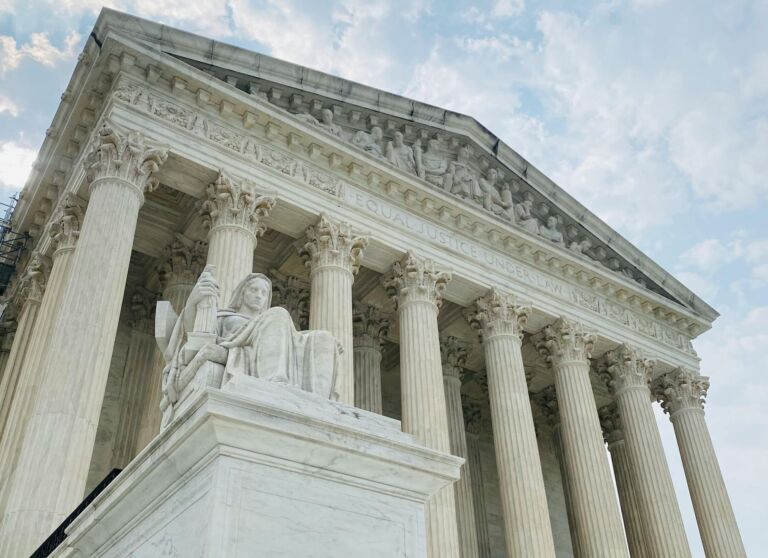
In a 6-3 decision Tuesday, the US Supreme Court struck down a federal law restricting how much money political parties can spend in coordination with their own candidates — a ruling that strengthens First Amendment protections for political speech and removes a decades-old restriction on how parties and candidates work together.
The case, National Republican Senatorial Committee v. Federal Election Commission, overturned the court’s 2001 precedent in FEC v. Colorado Republican Federal Campaign Committee, which had upheld the same limits by a narrower 5-4 vote. Writing for the majority, Justice Brett Kavanaugh held that the coordinated expenditure caps under the Federal Election Campaign Act violate the First Amendment.
What the Ruling Means
Under federal law, parties have long been free to spend unlimited sums supporting their candidates so long as that spending is not coordinated with the candidate’s own campaign. But coordination comes at a price: federal law has, until now, capped how much a party can spend on ads and other communications made in direct consultation with its own candidate. The practical effect was that a party committee could spend without limit only by keeping its candidate at arm’s length, thus forfeiting the ability to align message, timing, and strategy with the very candidate it was trying to elect. Critics of the old rule argued this was backward: A political party coordinating with its own candidate is core political association, not the kind of corruption campaign finance law was designed to prevent.
Justice Kavanaugh’s opinion embraced that view, writing that the decision “treats all political parties equally” and will let party committees “participate more freely and compete more fully in the political process, and to coordinate more closely with their candidates.”
Justice Elena Kagan, joined by Justices Sonia Sotomayor and Ketanji Brown Jackson, dissented, warning that the ruling “rewrites the rules, to allow circumvention of the contribution limits” and undermines safeguards meant to protect the integrity of elections.
Background
The challenge was brought by then-US Sen. JD Vance, then-US Rep. Steve Chabot of Ohio and the National Republican Senatorial and Congressional Committees argued that coordination limits prevented party committees from working with their own candidates to deliver a unified political message, a restriction they said had no place under the First Amendment. The full US Court of Appeals for the Sixth Circuit had upheld the limits, with Chief Judge Jeffrey Sutton acknowledging the challengers raised “fair points” but concluding the court was bound by Colorado Republican. Notably, the Trump administration declined to defend the law before the Supreme Court, prompting the court to appoint an outside attorney to argue in its defense.
Why This Matters for North Carolina
Tuesday’s decision is part of a broader trend at the US Supreme Court toward treating campaign spending restrictions with skepticism, following the reasoning of cases like Citizens United v. FEC and McCutcheon v. FEC. For North Carolina’s political parties — Democratic, Republican, or smaller parties — the ruling removes a federal ceiling on how closely state and national party committees can coordinate spending with their own candidates in federal races.
Supporters of campaign finance deregulation have long argued that limits like the one struck down Tuesday do little to prevent corruption and instead simply make it harder for parties to communicate and coordinate effectively with the candidates voters already chose to nominate. Tuesday’s ruling reflects that view, treating the relationship between a party and its own candidate as protected political association rather than a transaction in need of strict federal limits.
As with past campaign finance rulings, expect this decision to generate continued debate over the proper balance between preventing corruption and protecting political speech — a debate North Carolina’s congressional delegation and state party committees will now navigate under a different set of rules.

“Free speech win: SCOTUS strikes down coordinated party spending limits” was originally published on www.carolinajournal.com.


![[WBT107.9FM] app promo graphics 2025](https://wbt.com/wp-content/uploads/sites/84/2025/12/17653898024341.jpg?quality=80&strip=all&w=150&crop=0,0,100,150px)