Stein DPS pick faces Senate scrutiny over ethics, policing record
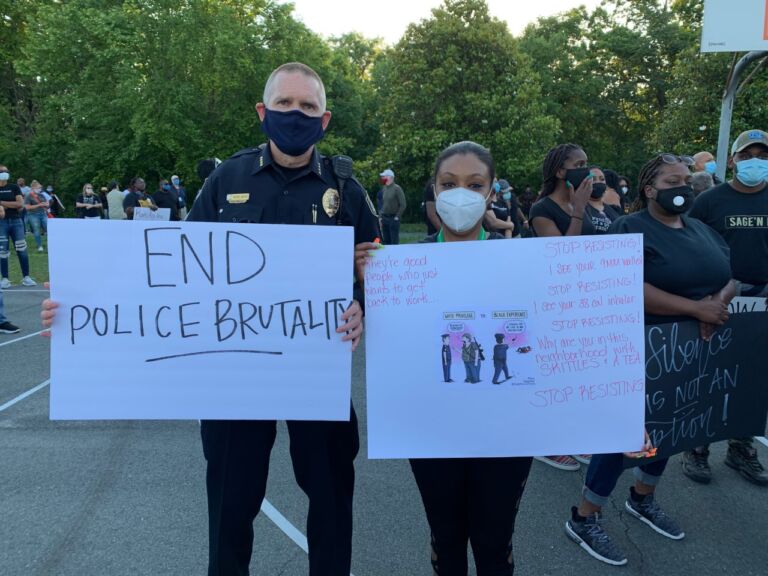
Senate Judiciary Committee leaders are reviewing ethics compliance, potential conflicts of interest, and a history of progressive policing policies ahead of a confirmation hearing for Gov. Josh Stein’s nominee to lead the North Carolina Department of Public Safety (DPS), Jeffrey Smythe.
Smythe, appointed in January after Eddie Buffaloe’s retirement, is a former Burlington police chief and current city council member. NCDPS oversees major state public safety functions, including prisons, emergency management, highway patrol, and local agency coordination.
In a May 15 letter to Acting DPS Secretary Jeffrey Smythe, Sens. Danny Britt, R-Robeson; Warren Daniel, R-Burke; and Buck Newton, R-Wilson, said the committee is undertaking a review of “ethics compliance and conflicts of interest” connected to Smythe’s nomination. The senators cited Smythe’s simultaneous service as acting DPS secretary and as a member of the Burlington City Council.
Smythe pushed back in a May 22 response, telling the senators that the State Ethics Commission had been made aware of his Burlington City Council role and “determined that my service on the Council does not create a conflict of interest.” Smythe also said he had discussed potential conflicts with his general counsel and that no conflict had arisen to date.
“Should I be confirmed, I am fully prepared to take all appropriate action to address any conflict of interest that may arise, up to and including resignation from the Burlington City Council if a conflict cannot be avoided,” Smythe wrote. “My priority remains serving all North Carolinians as Secretary of the Department of Public Safety.”
The exchange comes as Smythe’s nomination moves toward Senate review and as lawmakers have begun receiving letters of support from police leaders across the state, according to materials reviewed by Carolina Journal. Those support letters point to Smythe’s decades in law enforcement, his tenure as Burlington police chief, and his work overseeing law-enforcement standards at the Department of Justice.
Taken together, the ethics letter, Smythe’s response, and the need for expressed support highlight two core conflicts at the center of his confirmation: whether Smythe can serve effectively as both a local elected official and a state public-safety chief, and whether his record aligns more with mainstream law enforcement or an activist-driven policing agenda post-2020.
In a statement provided to Carolina Journal, a spokesperson for Stein defended Smythe as the right person for the job, citing his extensive public-safety resume.
“Jeff Smythe is a second-generation law enforcement officer who has dedicated nearly four decades to protecting people,” Stein’s office said. “As Burlington’s police chief, Smythe brought drug traffickers to justice, worked to break up gangs, and took illegal and stolen guns off our streets. His commitment to public safety as police chief impressed the Governor when he was Attorney General, so he hired Smythe to direct the Criminal Standards Division at the Department of Justice. There, Smythe dramatically reduced the time it took for law enforcement officers to get certified and managed the unit well. Governor Stein was proud to appoint him the Secretary of Public Safety and looks forward to continuing to partner with him to keep North Carolina safe.”
But the same record Stein praised includes several episodes likely to become flashpoints during confirmation, particularly for lawmakers skeptical of racial-equity initiatives, identity-based training, and activist-driven police reform.
A spokeswoman for Senate Republicans told the Carolina Journal that Smythe’s record raises broader questions about the department’s direction.
“Safety and security are top of mind for most North Carolinians,” the spokeswoman said. “They want to feel safe whether they’re at home or out and about living their daily lives. They deserve a Department of Public Safety Secretary who is laser-focused on protecting them and locking up violent criminals, not generating ‘feel good’ headlines or kowtowing to far-left activists.”
The confirmation process now places Smythe’s full record before senators, who will decide whether his background represents steady law-enforcement leadership or a record too closely aligned with activist-driven criminal-justice policy to lead North Carolina’s top public-safety agency.
Senators question dual roles
The Senate Judiciary chairs’ May 15 letter says the committee is acting under the Senate’s advice-and-consent authority and under state law governing cabinet appointments.
The senators wrote that they had received information “raising questions regarding a conflict” arising from Smythe’s service on the Burlington City Council while simultaneously serving as DPS secretary.
The letter argues that DPS is responsible for “oversight, funding, and policy decisions” that directly affect municipal operations, including those of Burlington, which may seek grants, appropriations, or other resources subject to Smythe’s review or influence as secretary.
“The conflict arises both when Burlington benefits directly from a Department decision and when Department actions apply statewide,” the senators wrote, “because in either circumstance your decisions as Secretary materially affect a municipality you concurrently help govern as a council member.”
The senators went further, arguing that the conflict “cannot be cured through recusal from certain City Council votes” and that it “undermines the independence and impartiality required of each role.”
Britt, Daniel, and Newton asked Smythe to clarify the basis for his continued service in both roles and explain how he intends to address the conflict.
Smythe’s response rejected the premise that his service on the city council creates a current conflict. He told the senators the State Ethics Commission had reviewed the matter and determined his Burlington role does not create a conflict of interest. He also said he had consulted with his general counsel about mitigating potential conflicts and that none had arisen.
Still, Smythe left open the possibility of resigning from the city council if a conflict could not be avoided after confirmation.
This answer may not resolve the core conflict for senators, whose letter argues that the problem is not just isolated incidents of overlap, but a fundamental, ongoing conflict between Smythe’s dual roles in city and state government.
Progressive Policing Policies
In June 2020, Smythe attended a George Floyd protest at North Park in Burlington and accepted a sign reading “End Police Brutality.” Smythe brought the sign back to the department so officers on duty could pose with it in a show of solidarity with protesters.

There were also many other progressive policing policies raised from Smythe’s tenure.
In a letter to the #8Can’tWait campaign, Burlington police said the department met or exceeded the national campaign’s recommendations in several areas. The campaign, launched during the George Floyd protests, pushed police agencies to adopt policies such as banning chokeholds, requiring de-escalation, requiring warnings before shooting, and requiring officers to intervene when witnessing excessive force.
In a separate response to Alamance Agents for Change, a local activist group pressing law enforcement agencies to change policy and practice, Burlington officials addressed issues including use-of-force policy, transparency, officer discipline, and the handling of officers accused of misconduct or association with hate groups.
In that response, Smythe described several reform-oriented actions already underway at the department. He wrote that Burlington police had continued sending personnel to Racial Equity Institute training and said a grant would allow additional staff to attend.
The same materials say Smythe also pointed to a Burlington policy governing police contacts and searches involving transgender individuals, describing it as the first known policy of its kind in North Carolina and noting that it had been designed and vetted by the ACLU.
Role on racial equity task force
Smythe later became involved with the state-level Task Force for Racial Equity in Criminal Justice, known as TREC, as the director of the Criminal Justice Standards Division and a member of the Local Policy Committee.
Gov. Roy Cooper created the task force in June 2020 after George Floyd’s death, with Stein and then-NC Supreme Court Associate Justice Anita Earls as co-chairs. The task force was charged with examining racial disparities in the criminal justice system and recommending policy changes.
TREC’s work went far beyond general calls for training or transparency. The task force eventually issued 125 recommendations touching nearly every stage of the criminal-justice system, including policing, officer discipline, school resource officers, juvenile justice, sentencing, incarceration, reentry, and victim services.
Among its most sweeping recommendations, TREC called for North Carolina to “reimagine public safety and reinvest in communities.” That included responding differently to situations involving mental illness, substance abuse, homelessness, and other non-emergency situations. The task force also recommended funding grassroots organizations and community violence-prevention programs, shifting some public-safety emphasis outside traditional law-enforcement structures.
Other recommendations went directly to police tactics and investigations. TREC called for law enforcement to use data and objective criteria, rather than officers’ “subjective perceptions and beliefs,” to determine the level of police presence in neighborhoods. It also recommended deemphasizing felony drug-possession arrests for trace quantities under .25 grams, prioritizing traffic stops that improve traffic safety, and requiring written, informed consent for all consent searches.
The recommendations also reached police accountability and discipline. TREC called for strengthening use-of-force policies, establishing early-intervention systems for officers who repeatedly violate use-of-force policies, expanding local citizen oversight boards, and expanding authority to suspend, revoke, or deny officer certification for excessive force or abuse of power.
Election to the Burlington City Council
Smythe won a seat on the Burlington City Council in November after campaigning on his experience as the city’s former police chief and his long familiarity with city government.
In an interview with The Alamance News before taking office, Smythe said he decided to run because Burlington was facing a leadership vacuum, with the mayor and two council members leaving or seeking other offices. Smythe said his eight years as police chief gave him “prior knowledge about the city” that he could bring to the council.
The interview also added political context to Smythe’s local support. The Alamance News reported that, during his time as police chief, Smythe said he had “endeared himself to many political progressives” through outreach to minority groups that had felt excluded from city leadership.
“I had support from the LGBT community, I had support from the Muslim community, and I had support from African-American churches,” Smythe told the paper. “But there was an anti-establishment flavor to the election, and I think that a lot of voters were impressed by my unaffiliated status during the entire time I’ve been in North Carolina. I’m pretty moderate. I agree with Democrats on some things, and I agree with Republicans on others.”
That overlap could raise additional questions for lawmakers as they consider his nomination. Smythe’s simultaneous role in Burlington city government invites questions about time commitments, recusal, and how he would handle matters involving local law enforcement or municipal public-safety funding.
Background
Before joining the state government, Smythe led the Burlington Police Department for eight years. His official DPS biography says his tenure in Burlington included initiatives focused on officer wellness, preparedness, de-escalation, implicit bias, and behavioral-health resources.
Smythe’s career also includes leadership roles in national and state law enforcement organizations. His Burlington City Council biography lists him as a former vice president of the North Carolina Association of Chiefs of Police, former president of the International Association of Directors of Law Enforcement Standards and Training, a commissioner for the Commission on Accreditation for Law Enforcement Agencies, and a life member of the International Association of Chiefs of Police and Police Executive Research Forum.
Smythe’s appointment is subject to confirmation by the North Carolina Senate under state law governing the governor’s cabinet appointments. A date has yet to be set for a confirmation hearing.
Smythe’s office did not respond to Carolina Journal’s request for comment by publication.
“Stein DPS pick faces Senate scrutiny over ethics, policing record” was originally published on www.carolinajournal.com.
![[WBT107.9FM] app promo graphics 2025](https://wbt.com/wp-content/uploads/sites/84/2025/12/17653898024341.jpg?quality=80&strip=all&w=150&crop=0,0,100,150px)