NC bill would expand ADUs, residential redevelopment

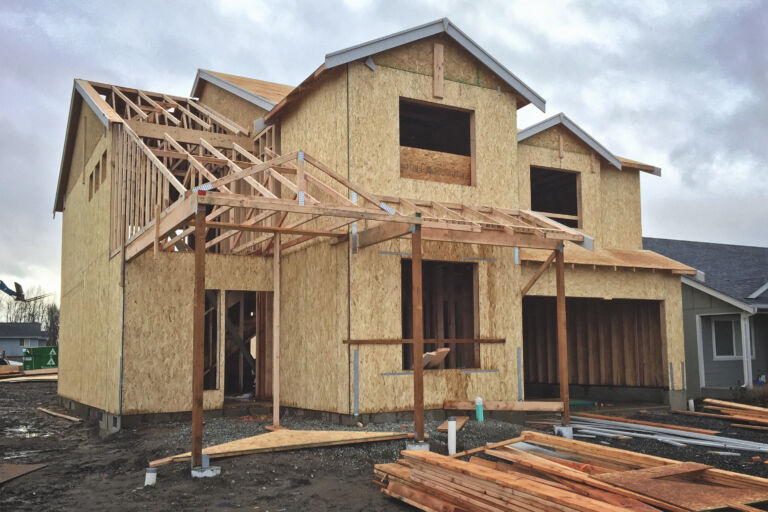
A Senate regulatory reform bill aims to increase housing construction in North Carolina’s larger cities by limiting local zoning restrictions on accessory dwellings and redevelopment in commercial areas.
Senate Bill 445, the Regulatory Reform Act of 2026, includes several housing and development provisions aimed at expanding housing supply and limiting some local zoning barriers.
The bill, sponsored by Sen. Steve Jarvis, R-Davidson, passed the Senate 46-0 in April 2025 and passed the House 85-28 before being sent back to the Senate for concurrence.
Kelly Lester, policy analyst for the Center for Food, Power, and Life at the John Locke Foundation, attributes North Carolina’s housing affordability challenge to a shortage of homes driven in part by land-use rules, parking mandates, permitting delays, and rigid zoning classifications that make it more difficult and expensive to build new housing.
While North Carolina home prices remain below the national average, housing costs have continued to rise. The average listing price in North Carolina in 2025 was roughly $520,000, according to HousingWire.
The scale of the problem reaches beyond homebuyers and renters. The US Chamber of Commerce estimates that North Carolina’s housing shortage has cost the state over $11.6 billion in lost economic output, $6.4 billion in personal income, and nearly 100,000 jobs that were not created.
Residential redevelopment in commercial zones
A major change in the bill requires certain cities to allow residential projects by right on redeveloped land currently zoned for commercial, business, or industrial use. The provision would apply to cities with at least 50,000 residents and counties with at least 275,000 residents.
“North Carolina has substantial amounts of land where housing is prohibited by local zoning rules despite being located near jobs, infrastructure, and services,” Lester said. “By opening more land to residential development, the bill increases opportunities for private investment and helps create the conditions for more housing supply and, ultimately, more affordable housing.”
Under this proposal, local governments could not prohibit qualified redevelopment projects because the land is zoned for nonresidential use. Eligible projects include single-family, multifamily, and mixed-use buildings. The by-right protection applies only to the residential part of a mixed-use project.
The bill would also prevent local governments from imposing a height limit below 60 feet on those qualifying residential redevelopment projects.
Rep. Jay Adams, R-Catawba, pushed back on that provision during committee discussion, questioning why the state should restrict local governments from setting lower height limits. He cited concerns about sightlines and other local issues.
“I’m thinking about a number of instances where a municipality, because of various sight lines and things, might want to do so,” Adams said. “Why would you want to implement such a regulation across the state?”
Rep. Allen Chesser, R-Nash, responded that the provision is limited in scope, applying only to redevelopment projects. It would not apply to undeveloped vacant land that has never had a structure or impervious surface.
Accessory dwelling units
Another key measure would require cities with populations of 50,000 or more to allow at least one accessory dwelling unit (ADU) on single-family detached home lots.
Lester said ADUs would broaden housing choices for families and let homeowners use their property more flexibly.
“These small homes can provide housing for aging parents, adult children, caregivers, and working families while creating additional income opportunities for homeowners,” Lester said. “SB 445 prevents local governments from using some of the most common regulatory obstacles that have historically made ADUs difficult or impossible to build.”
The bill bars local governments from requiring conditional zoning for ADUs, setting minimum parking requirements, blocking long-term rentals of either a home or an ADU, stopping utility connections when capacity is available, charging higher fees than for single-family permits, or capping ADU size below 800 sq ft.
The ADU section would not override private covenants or apply to historic preservation districts, National Historic Landmarks, or ADUs that are not connected to water, sewer, septic, or well service.
Chesser framed the ADU provision as a property-rights measure.
“If you have the property and you have access to utilities, if you want to put an accessory dwelling unit there that’s not going to impact anybody else’s property, we think you should be allowed to do it,” Chesser said.
Adams pressed, asking whether an adjacent landowner would have any opportunity to object to a proposed ADU.
“If it’s my property, it doesn’t impact my neighbor; why would my neighbor get the right to object to what I put on my property?” Chesser responded.
The proposal comes as housing affordability has become an increasingly prominent issue in Raleigh. Gov. Josh Stein recently signed an executive order aimed at addressing the state’s housing affordability crisis, saying North Carolina needs to coordinate across state agencies, work with local governments and builders, and encourage more housing options.
Separate housing proposals have been introduced in this year’s short session, including House Bill 1072, a bipartisan measure that would create a $50 million revolving loan fund to help nonprofit developers cover upfront infrastructure costs for affordable housing projects.
“NC bill would expand ADUs, residential redevelopment” was originally published on www.carolinajournal.com.

![[WBT107.9FM] app promo graphics 2025](https://wbt.com/wp-content/uploads/sites/84/2025/12/17653898024341.jpg?quality=80&strip=all&w=150&crop=0,0,100,150px)