Court hears DOT easement case with possible multibillion-dollar impact
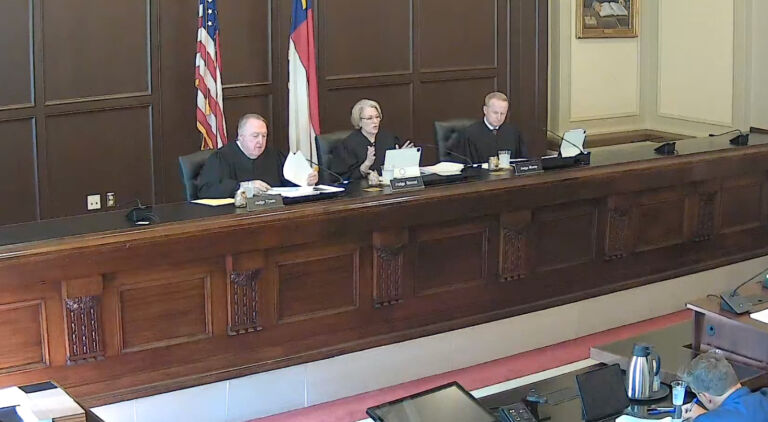
The North Carolina Court of Appeals must decide whether the state Department of Transportation must pay for the full value of a Mecklenburg County property affected by a utility easement in 2024.
The DOT’s lawyer predicted during oral arguments Wednesday that a ruling against the department could cost taxpayers “millions” in this case. An earlier court filing suggested the potential future impact for the DOT could amount to billions of dollars.
The case has attracted interest from North Carolina utility companies, the state’s leading trial lawyers group, and a leading state constitutional scholar.
DOT condemned 0.14 acres of a vacant, undeveloped 4-acre property owned by Indian Trail Plaza in 2024. Plans called for the condemned property along an adjoining road to be used for new lanes and space for a U-turn.
Indian Trail Plaza responded that the taking affected the value of the entire property, not just the 0.14 acres covered in the easement. The property owner sought more money from DOT. A trial judge agreed and ruled against the agency.
Located “about 30 minutes from uptown Charlotte,” the value of the full property “will likely go into the millions,” lawyer Ryan Park argued on behalf of DOT.
Yet decades of case law suggest that DOT should pay only for the land covered by the easement, Park argued. There’s no indication that DOT would go beyond its current plans to use the easement to block Indian Trail Plaza’s road access to the rest of the land.
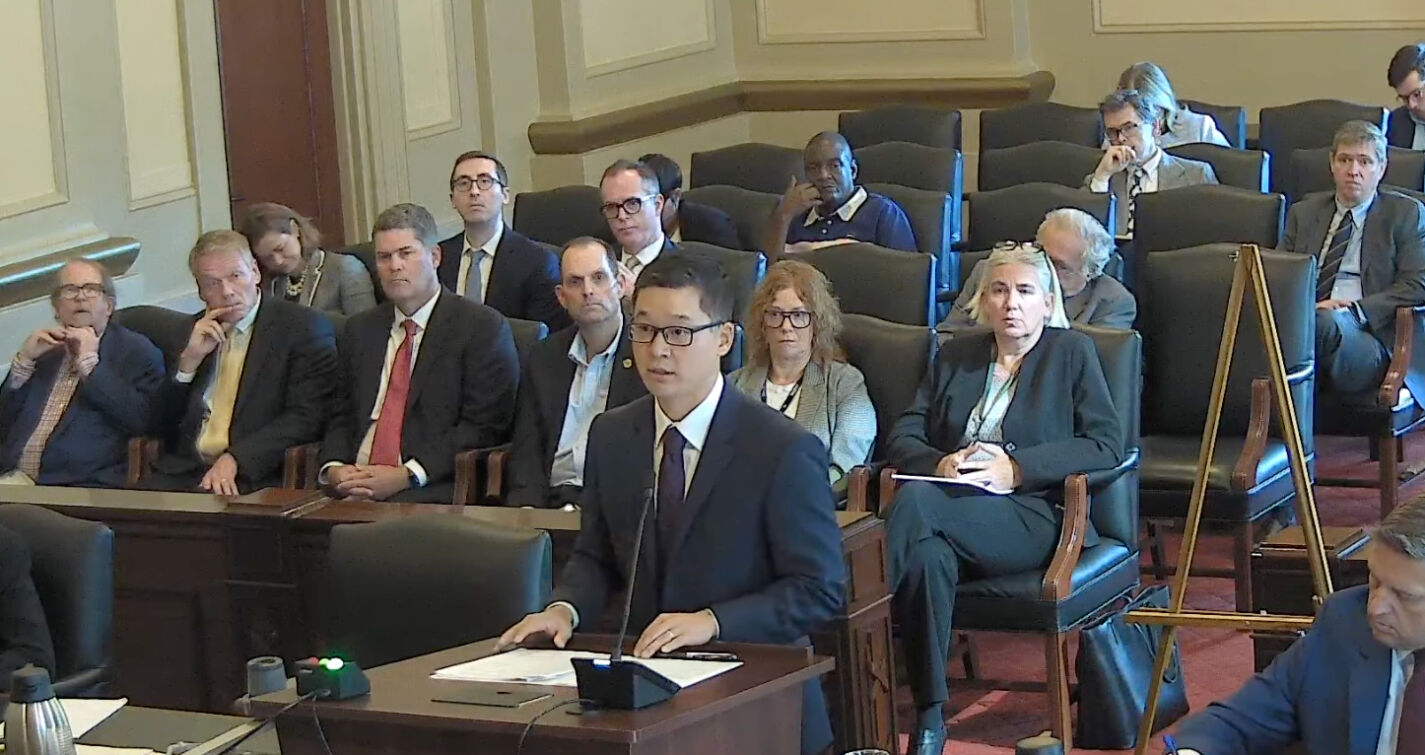
“Across the thousands and thousands of properties across the state that have these identical easements, there is no evidence that the department has ever executed a backdoor control of access through one of its standard utility easements.”
Requiring DOT to pay full value for an entire property when it takes an easement would mean a “crippling financial consequence for the state,” Park argued. It would also destabilize property rights in thousands of other cases of similar easements statewide.
Indian Trail Plaza responded that the case is about “whether or not the landowners are being dealt with fairly,” according to lawyer Rachel Fuerst.
“My friend from the DOT seems to place the burden improperly on the landowner and hopes that the landowner should give up its constitutional right to just compensation in favor of the DOT being able to only pay part now for what it has taken the ability to use in 50 years, 100 years, 1,000 years,” Fuerst said.
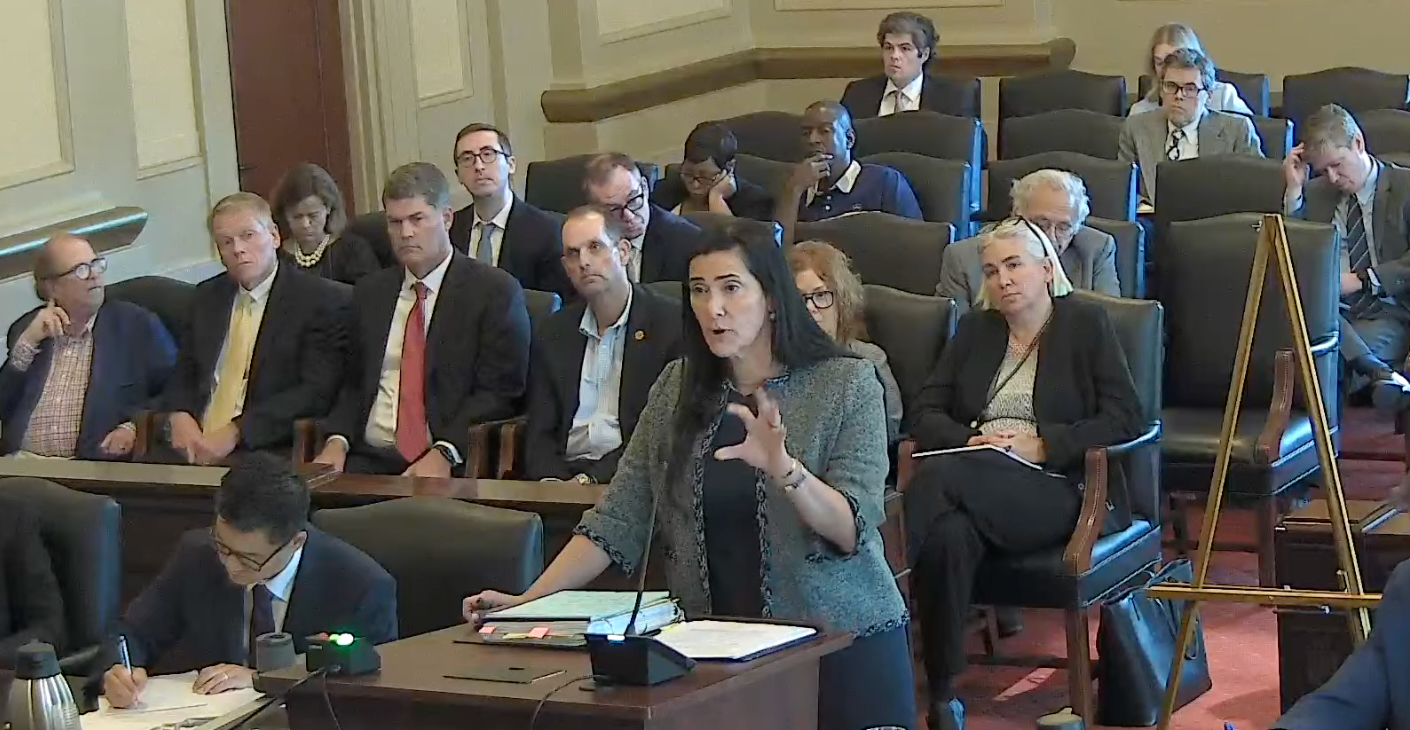
Appellate judges expressed some skepticism about Fuerst’s argument.
“You want us to predict 500 and 1,000 years in the future,” Judge Donna Stroud said. “This could not be a problem at all because we’ll be flying around like the Jetsons then, right?”
Every case involving a utility easement would become a “total taking” requiring compensation under Indian Trail Plaza’s legal theory, Stroud added.
Park disputed Indian Trail Plaza’s characterization of DOT’s ability to expand its use of the easement.
“Indian Trail Plaza contends that the Department of Transportation has unilateral, unreviewable authority to determine what’s reasonable under its own easements,” Park argued. “That’s not the law. That would be a pretty scary aggrandizement of government power if the Department of Transportation could say we have these easements on basically every property in the state and we can do whatever we want because whatever we want to do is reasonable,” he said. “That’s not the law.”
“And that’s not what the easement says either,” responded Judge Tom Murry. Murry focused questions on provisions in the easement limiting DOT’s ability to block road access to Indian Trail Plaza.
“You’re saying it’s not what they’re going to do today by some plan they’ve done,” Tyson said when questioning Fuerst. “It’s what they have the right to do in the future and if they exercise that right without coming back.”
North Carolina Advocates for Justice filed paperwork in May to submit a friend-of-the-court brief opposing the DOT’s position. Duke Energy, Dominion Energy, and the North Carolina Electric Membership Corporation filed a brief in March supporting the state transportation agency.
The department warned in a March court filing that the case could have “immense” consequences and subject taxpayers to “billions of dollars in liability.”
NCAJ disagreed with the transportation agency’s arguments.
“[T]he relief sought by DOT and other amicus petitioners is not properly obtained from this Court, but instead through more careful and precise drafting of the easement language chosen when unilaterally condemning easements from North Carolina property owners,” according to the trial lawyers’ court filing.
The court filing addressed the “public cost” concerns raised by DOT and the energy providers. “Neither of these public policy arguments should deter the Court from holding DOT accountable to pay for all the rights acquired in the easements that it drafted and thrust upon the landowner,” NCAJ lawyers wrote.
“DOT is in full control of what rights and interests it acquires from a property owner,” the court filing added. “It must pay full, fair and final compensation for what it takes. The remedy is not to have this Court re-write the intent of the general statutes or re-write the terms of the easement that DOT drafted.”
“The remedy is for DOT to draft better easements going forward that only take rights from the property owner for the specific public use needed at the time of the taking,” NCAJ argued. “Reversing the trial court would allow DOT, and other condemnors, to take more rights than needed – including those expressly not needed at the time of the taking – without compensating the property owner at the time of the taking or in the future when those utilities are put into use.”
Energy providers led by Duke supported the DOT’s case in a friend-of-the-court appellate brief.
“As private utilities and cooperatives with the authority to take permanent utility easements under North Carolina law, Proposed Amici have an interest in ensuring that North Carolina courts interpret easements correctly and strike the appropriate balance between the private and public interests at stake when a condemnor takes an easement for the public good,” according to the energy providers’ March court filing. “In particular, Proposed Amici have a strong interest in ensuring that easements are interpreted in a way that gives full meaning and effect to the easements’ plain language and that just compensation is correctly determined for utility easements like the one at issue in this appeal. This includes ensuring that compensation is determined by market realities, and not legal fictions and presumptions.”
A trial court’s ruling in the Indian Trail Plaza case raises concerns for the electricity providers. “[B]ecause improvements in utility infrastructure will be critical to North Carolina’s economic development in the coming years, Proposed Amici have a strong interest in making the Court aware of the possibility that, if affirmed, orders like one below could make providing such improvements more expensive,” according to the court filing. “This, in turn, could lead to increased costs to citizens across the state, either in the form of higher taxes or increased utility rates.”
The trial court order has “potential unintended effects” on “public work projects across the state,” the electricity providers argued. “Rising utility costs are a mounting concern across the state, and Proposed Amici have an interest in ensuring that the Court is aware of the risk that orders like the one below would only increase those costs. And that is because orders like the one below threaten to turn limited utility easements into a windfall for a small group of property owners, imposed at substantial cost to the public and to an infrastructure system already straining against demand.”
The court granted an amicus request in the case from University of North Carolina law school professor John Orth, a state constitutional scholar. He has taught property law classes since 1978. Orth co-authored a 2013 edition of a book on the North Carolina Constitution with current state Supreme Court Chief Justice Paul Newby.
“Professor Orth is interested in this case because the trial court’s ruling implicates a fundamental distinction in North Carolina property law and the law of eminent domain: the distinction between a fee simple taking and the taking of an easement,” according to Orth’s brief. “The trial court’s [o]rder … collapses this crucial distinction in a manner likely to cause confusion for practitioners of property law and the law of eminent domain in North Carolina.”
“To build and maintain our State’s extensive network of roads and highways, the Department takes certain easements on private property adjoining public roadways. These easements are everywhere,” wrote DOT’s lawyers in their Appeals Court brief. “They typically cover a narrow slice of land along the roadway and allow the Department to install and maintain utility infrastructure — such as electric, gas, and water lines.”
“The Department commonly assigns these easement rights to public utility companies, which use the easements to develop critical infrastructure, enhancing the value and usefulness of private property along the roadways,” the department’s court filing continued. “Without the easements, highway construction and access to utilities would slow to a crawl, significantly damaging our State’s overall economy.”
“Until recently, the Department’s process for taking these easements was uncontroversial,” DOT’s lawyers argued. “The Department would offer landowners fair compensation based on the modest burden the easements place on their property rights within the easement areas. Landowners usually accepted these offers, recognizing that the easements have no material adverse impact on their property’s value. Many landowners also recognized that, without access to utilities like water and electricity, their properties would be useless.”
“Recently, however, some landowners have sought to upend this settled process by claiming that these routine easements completely destroy their properties’ value,” the court filing continued. “They have therefore demanded that the Department pay them the full fee-simple value of their entire properties merely for taking the right to install and maintain utilities over a narrow strip of land along the roadway. Remarkably, many trial courts have accepted this novel theory.”
DOT emphasized that the Indian Trail Plaza dispute involved “less than 3.5%” of the total property. The department allocated $118,525 to cover just compensation for the easement.
“ITP asked the trial court to determine the nature and extent of the taking, urging it to conclude that the easement ‘effectively terminated’ ITP’s property rights. The trial court agreed, believing that the easement could theoretically allow the Department and its assignees to install utilities in the easement areas that block ITP from accessing its property,” the department’s brief explained.
“That conclusion was wrong,” DOT argued, citing four reasons. First, the easement’s “plain language” preserved the property owner’s right of access. Second, “background principles of law” would bar DOT from blocking access. Third, the legislature has directed that just compensation must be based “on the taking’s actual effect on the property’s fair-market value.”
“Here, the record establishes that the Department’s utility easements have no appreciable effect on a property’s fair-market value,” according to the department’s brief. “The trial court ignored this evidence, construing the easement as destroying ITP’s property rights as a matter of law. This approach will prevent the jury from hearing evidence on the taking’s effect in the real world. It therefore guarantees that the jury’s just-compensation award will not be based on the standard for calculating just compensation established by the General Assembly.”
Fourth, if DOT attempted to block access to the property, that would amount to a second taking. “At that point, the landowner would be entitled to a new award of just compensation,” the department’s lawyers wrote.
DOT argues that the plaintiffs’ lawyers “have consistently urged courts to interpret the Department’s easements expansively, aggressively resisting any judicial ruling that would limit the easements’ scope.”
“At first blush, this posture might appear paradoxical,” the brief continued. “If they were really concerned with protecting their property rights, why would landowners demand that courts impose greater burdens on those rights? But ITP knows that the Department does not actually use the easements in the ways they claim to fear.”
“Indeed, ITP cannot identify a single time that the Department has ever used an easement to completely block a landowner’s access,” DOT lawyers argued. “ITP also knows that the easements do not actually harm its property’s market value. Countless properties with identical easements are bought and sold every day at full, fair-market value.”
“By using the courts to foist property rights on the Department that it does not want and will not use, ITP seeks an unwarranted windfall at the taxpayer’s expense,” department lawyers wrote. “If successful, the consequences of this gambit will be immense. The Department has thousands of similar easements. If the decision below is affirmed, the Department could face billions of dollars in liability for unused and unwanted property rights.”
“The prospect of such liability would require the Department to alter fundamentally the way it builds and maintains our State’s roads,” DOT warned. “Those changes would, at minimum, cause years of delays on roadbuilding projects in our fast-growing State.”
“Court hears DOT easement case with possible multibillion-dollar impact” was originally published on www.carolinajournal.com.

![[WBT107.9FM] app promo graphics 2025](https://wbt.com/wp-content/uploads/sites/84/2025/12/17653898024341.jpg?quality=80&strip=all&w=150&crop=0,0,100,150px)