In praise of the tomato sandwich
Every so often, a North Carolina summer offers a reminder that not every public question requires a policy solution.
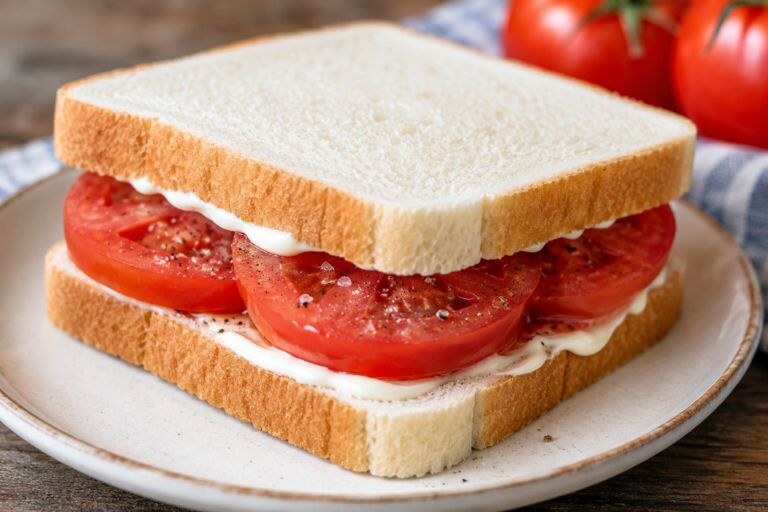
Some require two slices of white bread, mayonnaise, salt, pepper, and a tomato too ripe to survive a cross-country truck ride.
The state budget, property taxes, economic growth, and the latest political disagreement will still be waiting next week. Right now, it is tomato sandwich season.
I do not mean the pale, sturdy tomatoes that remain technically edible throughout the year. Those tomatoes have been bred and selected to withstand harvesting, packing, shipping, refrigeration, and several days beneath grocery-store lights. They have their purposes.
But they are not the tomatoes around which summer memories are built.
A proper sandwich begins with a tomato that has ripened under the North Carolina sun. It should be slightly too soft, irregularly shaped, and heavy with juice. It should require careful handling on the way home from the garden, farmers market, or roadside stand. A tomato capable of being dropped into the bottom of a grocery bag without consequence is probably not ready for this assignment.
Once a good tomato has been acquired, the process is simple.
Take two slices of soft white bread. Spread mayonnaise on both. Add a thick slice of tomato, salt, and black pepper. Put the sandwich together and eat it immediately, preferably while leaning over the kitchen sink.
The sink is not optional if the tomato is good.
Southerners have apparently understood this for a long time. Printed references to tomato sandwiches appeared by the early 20th century, although the meal was almost certainly familiar before anyone thought it important enough to record. It was not a restaurant invention or a chef’s creation. It was simply what people did when gardens were producing more ripe tomatoes than a family could reasonably preserve or give away.
Mayonnaise helped make the tomato sandwich a Southern institution, and one familiar brand has its own Carolina history. Eugenia Duke began making sandwiches for soldiers at Camp Sevier near Greenville, South Carolina, during the First World War. The mayonnaise she used became popular enough to take on a life of its own, eventually becoming a fixture in Southern refrigerators.
For the record, I use Duke’s.
I have, however, become partial to Vivian Howard’s Smoked Corn Mayo from her cookbook, “Deep Run Roots,” which celebrates the ingredients, traditions, and food culture of eastern North Carolina. The smoky sweetness of the corn works remarkably well with a ripe summer tomato.
Purists may object that this is unnecessary interference. I prefer to think of it as one eastern North Carolina food tradition paying tribute to another.
Still, the tomato decides the sandwich.
For me, the German Johnson is hard to beat. It is a big, pink heirloom that has been grown in North Carolina and Virginia for generations, with a particularly strong following in Alamance County. There, locally grown German Johnsons became the centerpiece of the North Carolina General Assembly’s Tomato Sandwich Day, begun in the 1990s by state Sen. Hugh Webster. One thick slice will often cover most of the bread, and it has the kind of sweet, tangy flavor that tastes like summer. Add mayonnaise, salt, and pepper, and lunch is ready.
Then there is the Cherokee Purple. In 1990, Tennessee gardener John Green sent seeds from an unnamed purple tomato to heirloom-tomato expert Craig LeHoullier, who was living in Raleigh at the time. LeHoullier grew the tomato, named it Cherokee Purple, and helped introduce it to gardeners and seed companies across the country. North Carolina may not be the tomato’s original home, but an expert working in Raleigh helped make it one of America’s best-known heirlooms.
Darker, richer, and less orderly than the German Johnson, the Cherokee Purple may be lumpy, cracked, and green at the shoulders. That is part of its charm. It looks like something grown to be eaten rather than photographed, and its deep, complex flavor requires little more than bread and mayonnaise.
North Carolina’s contribution to the tomato sandwich is not limited to preserving heirlooms. The state has also helped develop a more modern generation of tomatoes.
I have not yet tried one in a sandwich, but I keep hearing good things about the Mountain Series of hybrids developed by Dr. Randy Gardner through NC State University’s tomato-breeding program in Henderson County. Mountain Pride, Mountain Merit, and Mountain Fresh Plus were bred to resist disease, produce reliably, and still deliver the size and flavor people expect from a slicing tomato. Tradition and agricultural innovation need not be enemies, though I cannot yet testify that a Mountain tomato belongs beside the German Johnson and Cherokee Purple in the sandwich pantheon.
But tomato season is not over, and responsible journalism occasionally requires fieldwork.
Then come the arguments over how thick to cut it and how much salt and pepper to use.
The use of Miracle Whip is not a legitimate subject for debate.
Part of the pleasure of a tomato sandwich is that it belongs to a particular season. Modern agriculture and transportation have made fresh produce available throughout the year, an accomplishment for which we should be grateful. But year-round availability is not the same thing as summer. A true summer tomato arrives when it arrives, remains with us briefly, and then disappears. That brief season makes the first good tomato sandwich of the year feel like an event.
It also reminds us that abundance does not always require extravagance. Sometimes the best thing on the table is something grown nearby, handed over a fence by a neighbor, or bought from a farm stand on the way home.
Summer will not last, and neither will the tomatoes. That is all the more reason to eat one now — on white bread, over the sink, before the next round of Roy Cooper and Michael Whatley ads fills our screens.
“In praise of the tomato sandwich” was originally published on www.carolinajournal.com.
![[WBT107.9FM] app promo graphics 2025](https://wbt.com/wp-content/uploads/sites/84/2025/12/17653898024341.jpg?quality=80&strip=all&w=150&crop=0,0,100,150px)