NC charter schools hit record enrollment as sector approaches 30 years
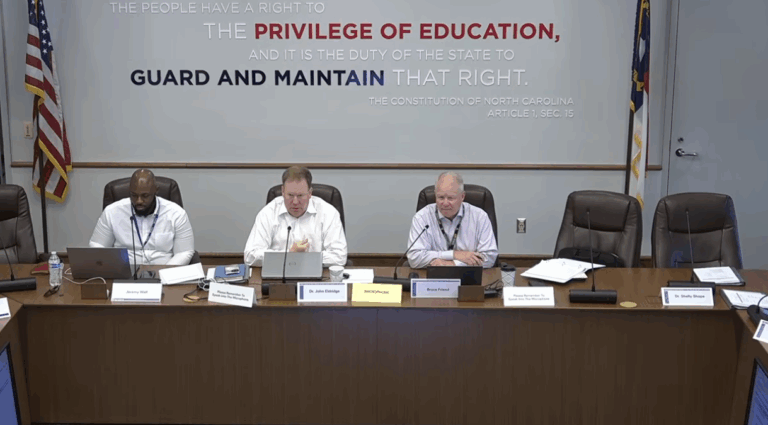
The charter school sector in North Carolina hit a new high-water mark this year, reaching a record 213 schools and 161,057 students, according to the “2025 Annual Charter Schools Report” presented to the state Charter Schools Review Board on June 8.
Charter school students now represent around 10.5% of the state’s public school enrollment. Nearly three decades after the first charters opened in 1997, demand keeps climbing: 138 schools reported waitlists topping 59,000 students, though the report notes some names may be duplicates.
Overall, North Carolina ranks fourth in the nation for charter enrollment growth over the past six years, behind only Texas, Florida, and California.
According to the new report, charter school performance grades improved year over year, with the share earning an A or B rising from 26.6% in 2023-24 to 30.1% in 2024-25. Academic growth also ticked up, with 72.3% of charters meeting or exceeding expectations, up from 70.3%. The share of low-performing schools has fallen to 24.9%, down from 28.2% in 2022.
“The wide variety of choice for something as personal as how a student best learns and grows is something to be celebrated,” Ashley Logue, director of the Office of Charter Schools, told the review board.
Proficiency, however, continues to lag behind pre-pandemic levels. Grade-level proficiency was 61.2% in 2024-25, six points below 2019, and college and career readiness fell to 38.9% — down two points from the prior year and more than 13 points below 2019. The report calls readiness the clearest academic concern.
The report noted that these gaps are largest for students with disabilities. They posted a college-and-career readiness rate of 10.3%, the lowest of any subgroup. On the positive side, Logue noted that economically disadvantaged enrollment has climbed from 24% in 2019 to 40.9% in 2024, while proficiency for that group held relatively stable, and Hispanic enrollment has “tripled from 2010.”
Logue also raised the issue of whether the state has the appropriate capacity to oversee and support the growing charter schools network. The Office of Charter Schools grew from monitoring 96 schools in 2009 to 213 this year while its staff stayed largely flat, she said. Seven consultants now handle applications, monitoring, the ready-to-open process, and closures.
“With greater numbers of staff, we could do more things that we would like to do,” Logue told board member Gerald McNair, who asked whether her office was adequately staffed. “The staffing for the most part has not increased.”
McNair pointed across the border to the Charter Institute at Erskine, a South Carolina authorizer he said oversees 34 schools with 40 staff. “Imagine having 40 of these guys… what could get done?” Logue replied, “I’m very proud of the work our office accomplishes given the reality of the numbers.”
Support funding is similarly stretched, Logue said. The state’s charter transportation grant allots $2.5 million a year against nearly $9 million in eligible expenses. That only applies to schools serving more than 50% economically disadvantaged students.
Those pressures show most when new schools try to open. Low enrollment is now a growing cause of early closure, Logue noted. Of 96 closures since 1998, nearly two dozen of the 55 relinquished charters never opened. At the same meeting, the board delayed one ready-to-open school and denied another outright over enrollment and readiness shortfalls.
The state is betting partly on outside help — a new four-year partnership with the UNC-based North Carolina Collaboratory, funded at $1.5 million recurring, to study charter effectiveness and growth.
“We’re not always going to tell you what you want to hear,” Collaboratory research director Jenny Korn told the board, “but we’re going to tell you what you need to hear.”
The board voted unanimously to approve the report, which now moves to the State Board of Education and then to the General Assembly.
“NC charter schools hit record enrollment as sector approaches 30 years” was originally published on www.carolinajournal.com.