The public’s sense of betrayal at wasted taxpayer money
Not everything we cover in the news business makes it through to the average person on the street. They have so many things competing for their attention, and what we report on can often be fairly technical or only of interest to those fixated on state policy. But one exception I’ve seen to this rule over the years is when public money is egregiously wasted.
The spending decisions made by officials in the Town of Cary is an obvious recent example. People I know in my personal life who rarely discuss anything from local or state news have asked, “Have you heard about the crazy things they wasted money on in Cary?” Those who do not live in the town can ask this with a bit of an amused smirk at the outrageousness of some of the spending. But for those whose taxes go to this particular city’s budgets, there’s a sense of exasperation and even outrage.
For them, it’s not just another story of government waste somewhere out there. It’s a direct betrayal because it’s THEIR money being wasted. A lot of the money we earn each week ends up, not in our own bank accounts, but sent to various levels of government, on spending we understand is necessary — roads, police, schools, etc. And we are also resigned to the fact that a fair bit of it is wasted, no matter how many promises we hear about ending waste, fraud, and abuse.
But when the waste is so egregious and unapologetic, it feels like a slap in the face. They are, in effect, saying, the 100 or more days a year that you as a taxpayers spend funding the various levels of government is not taken seriously. It is not being treated as hard-earned money given to elected officials trusted begrudgingly to spend with care, but as a private piggy bank to spend however they see fit.
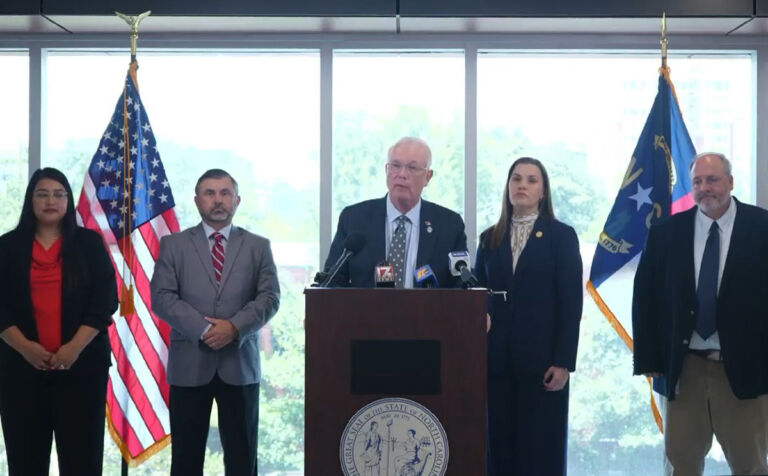
In Cary, the state auditor, Dave Boliek uncovered lots of this wasteful, and frankly disrespectful, spending:
- $37,301 in graduate tuition paid on behalf of Councilmember Lori Bush (which she later reimbursed the town for)
- $65,653 to a ghostwriter for a book about the town manager
- $3,419 for that same town manager to stay in a penthouse hotel suite
- $86,000 spent to document a town retreat to Wilmington, including dance training for a surprise performance of the song “Dancing Queen” by town staff
- Then an additional $35,000 for a documentary that told the story of how that video was produced
They also got very expensive matching sunglasses, approved widespread use of city-owned vehicles, and gave the majority of city employees credit cards. Town Manager Sean Stegall, who no longer works for the city and is now under investigation, appeared to be responsible for much of the lavish spending choices.
Stegall’s most widely discussed initiative was the “Dancing Queen” video — not only the video of the performance but then the self-serious documentary about the experience and what it meant to those involved. It reminded me a bit of the mockumentary movies, like “Best in Show” or “Spinal Tap,” where people are interviewed very sincerely discussing a very silly event.
A clip of this can be seen below, shared by CJ Radio’s Nick Craig.
Presenting the $121,314 production funded by the taxpayers of Cary. I’m sure this was exactly what everyone had in mind when they paid their property taxes. #ncpol https://t.co/7YCT8P7cdI pic.twitter.com/MhLRkTCvMv
— Nick Craig (@nicholasmcraig) July 16, 2026
But government waste isn’t confined to progressive suburbs like Cary. Carolina Journal reported this week on some wasteful spending coming out of the more conservative and rural Harnett County. Deep in the long list of 727 earmarks for local projects — which are injected into budgets anonymously late in the process, making discovering who requested them difficult — were two appropriations for the HOA of a gated community.


Carolina Lakes Property Owners’ Association received appropriations of $160,000 for “emergency services needs” and another $140,000 for “various needs, including shelter replacement, repair, and maintenance.”
This gated community boasts 1,700 homes nestled along seven lakes, with 24 boat slips, a marina, a clubhouse, a beach, a 9-hole disc golf course, a 1-mile fitness trail, three playgrounds, a large swimming pool, a large athletic field, a basketball court, a tennis court, two pickleball courts, and secure boat and RV storage for residents.
Why exactly they needed $300,000 of state money for an HOA with that many units, when they could have presumably just raised their dues a negligible amount, or had a special assessment, to get whatever funds they needed, isn’t clear. But “various needs,” including shelter repair, for a private community that appears to be doing just fine does not seem like something that should make its way into the state budget.
If we create the precedent for the state to cover these kinds of private local concerns, expect HOAs across the state to start sending in requests to cover their own “various needs.”
These kinds of stories get traction with the public because they feel like a betrayal of trust. We know there are legitimate government needs, and we elect people we hope will find ways to efficiently and effectively use our money to fulfill those needs, and hopefully not much else. But when it looks like they are not taking that sacred trust seriously, people stop scrolling and take notice.
“The public’s sense of betrayal at wasted taxpayer money” was originally published on www.carolinajournal.com.

![[WBT107.9FM] app promo graphics 2025](https://wbt.com/wp-content/uploads/sites/84/2025/12/17653898024341.jpg?quality=80&strip=all&w=150&crop=0,0,100,150px)