A double standard on press access
The North Carolina Constitution is clear: “Freedom of speech and of the press are two of the great bulwarks of liberty and therefore shall never be restrained, but every person shall be held responsible for their abuse.”
That protection is certainly fundamental, but it also requires a consistent standard. Political campaigns are private organizations. They have the right to decide which reporters they speak with, which interviews they grant, and how they manage access to their candidates. Reporters and editors are free to criticize those decisions. But a campaign’s choice about access is not the same as a government institution restricting access to public business.
That distinction appears to have been lost in the criticism of US Senate candidate Michael Whatley’s campaign after it limited access for certain media outlets.
There is no group that understands the frustration of being denied access like Carolina Journal, but some of the loudest complaints have come from organizations that have shown little concern when access restrictions were imposed by government officials, including former Gov. Roy Cooper, whose administration repeatedly ignored calls, record requests, and emails; and excluded Carolina Journal from media distribution lists.
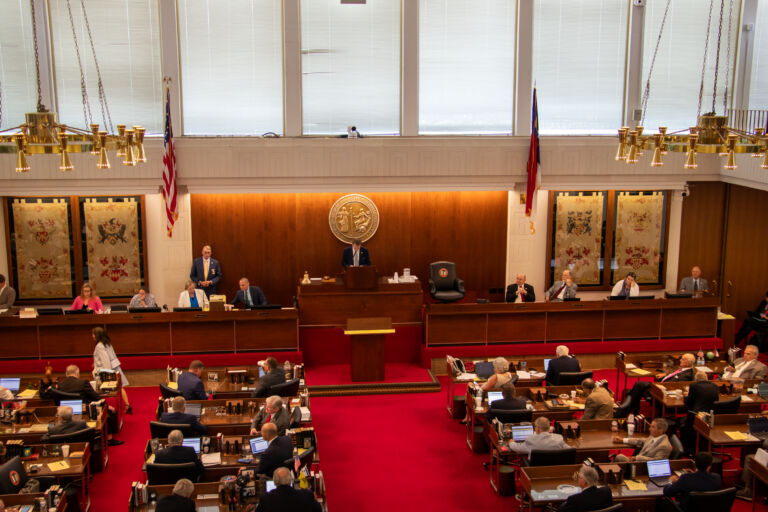
The controversy also raises questions about the standards used by the North Carolina Capital Press Corps, which credentials journalists employed by organizations who do not lobby lawmakers or whose “primary business is collecting and disseminating general news.” While we are members of the NC Press Association, we are excluded from membership in the Capital Press Corps at the state legislature because Carolina Journal is part of the John Locke Foundation, a public-policy organization. The Capital Press Corps credentials media and provides access to the legislative chamber floor and press seating in committee meetings. While the special access is limited to the legislative building, some other government officials use it as a measure of legitimate press.
The credentialed Capital Press Corps roster includes outlets such as McClatchy, NC Newsline, WRAL (owned by Jim Goodmon’s Capital Broadcasting Company), North Carolina Health News, and even The New York Times, because NYT has a North Carolina-based reporter who visits the legislative building on occasion.
The distinction becomes even harder to explain when considering organizations with clear ideological leans. NC Newsline, for example, was formerly a product of the North Carolina Justice Center (it still comes up first in a google search of the group). But in 2023, it became a part of States Newsroom, an organization whose outlets have been described as producing nonpartisan news while maintaining a center-left commentary perspective. The Columbia Journalism Review has examined the organization’s structure and noted its encouragement of progressive commentary. The point is not that NC Newsline should be excluded. Nor is it that organizations with a perspective cannot produce legitimate journalism.
They can. The point is that journalism exists in many forms, and readers benefit when they have access to more information, not less.
WRAL’s connection to Capitol Broadcasting and longtime owner Jim Goodmon raises similar questions about where journalism ends and advocacy begins. He was praised by UNC’s Hussman School of Journalism for “leveraging CBC resources,” to support causes involving education, the arts, and social issues. In public remarks, including a 2022 Martin Luther King Jr. Day speech, he called for Medicaid expansion and criticized Republican policy positions on issues including redistricting and education funding while urging people to “march to the polls.”
None of that proves that WRAL reporters are directed by Goodmon’s views or that their journalism is not independent. But it does challenge the idea that ideological identity or institutional affiliation can be applied selectively when deciding who qualifies as a legitimate news organization.

A free press does not require government officials or candidates to agree with every journalist. But it does require a fair approach. What is difficult to defend is a system where conservative or free-market affiliations are treated as disqualifying, while progressive or left-of-center institutional ties are overlooked.
Connections between journalism organizations, institutional values, and public policy engagement have always, and will continue, to exist across the media landscape, particularly as technology democratizes the industry. Denying that is disingenuous to readers. Carolina Journal clearly states that we are affiliated with the John Locke Foundation, a free-market think tank and advocate for less spending, a smaller government, and pro-liberty policies. We view and analyze public policy through that lens, and readers increasingly include our work on their reading lists knowing that perspective. It is on our label for consumers to stay informed, like with any other product.
We have criticized Republicans and Democrats alike when we believe their policies or decisions deserve scrutiny. Our purpose is not to promote candidates or protect politicians. Our purpose is to provide readers with reporting, analysis, and information about government, taxes, education, energy, elections, public safety, or government spending,
In practice, repeated denial of Capital Press Corps credentials is relatively inconsequential. Reporters no longer need a seat in a press filing room to provide meaningful reporting. We are members of the public and public buildings are open to us, just as they are everyone else. Lawmakers, leadership, even some Democrats, will talk to our reporters and return our calls. We occasionally swap stories and information with colleagues in other outlets. The extra hurdle makes us more determined to get accurate information out to readers. Still, the focus for media access should not be on whether an organization shares a particular worldview.
The focus should be on the work.
Are reporters gathering information and linking to it?
Are they asking good questions?
Are they providing accurate reporting and analysis?
Are they holding those in power accountable?
Over the years, our readers have not waited for us to receive a credential before expecting answers. Carolina Journal has broken news, analyzed legislation, investigated government actions, and provided context on major policy debates often without the same access afforded to other news organizations.
A healthy democracy depends on an informed public and that requires more reporting, more scrutiny, and more access to information. Press access is not ultimately a privilege for reporters, it is a benefit to the public.
“A double standard on press access” was originally published on www.carolinajournal.com.