FEMA approves $297M for Helene recovery
More than 20 months after Hurricane Helene devastated western North Carolina, federal officials have approved another $297 million in disaster recovery and mitigation funding for North Carolina communities, according to announcements this week from US Sen. Ted Budd, R-NC; and Rep. Chuck Edwards, R-NC11.
The latest funding package includes more than $267 million in FEMA Public Assistance grants for 65 projects and more than $30 million through the Hazard Mitigation Grant Program (HMGP). The awards support debris removal, road and bridge repairs, utility restoration, water and sewer infrastructure projects, emergency response costs, and long-term flood mitigation efforts across western North Carolina.
The announcements represent one of the largest single batches of recovery funding approved since the storm struck in September 2024.
“A year and eight months ago, Hurricane Helene devastated Western North Carolina, crippling critical infrastructure and disrupting local economies,” Budd said in a statement. “Today, I am grateful to announce FEMA has approved two significant tranches of federal funding to help communities shoulder the immense financial burden of recovery and rebuilding.”
The funding arrives as many mountain communities continue rebuilding roads, waterways, public utilities, and other local infrastructure damaged by historic flooding and landslides.
A significant share of the funding is directed toward debris removal projects that remain underway throughout western North Carolina.
Yancey County received more than $32.2 million for debris removal operations. North Carolina Emergency Management received multiple awards totaling tens of millions of dollars for debris removal and sediment removal projects in Avery, Jackson, Clay, Henderson, McDowell, and Rutherford counties.
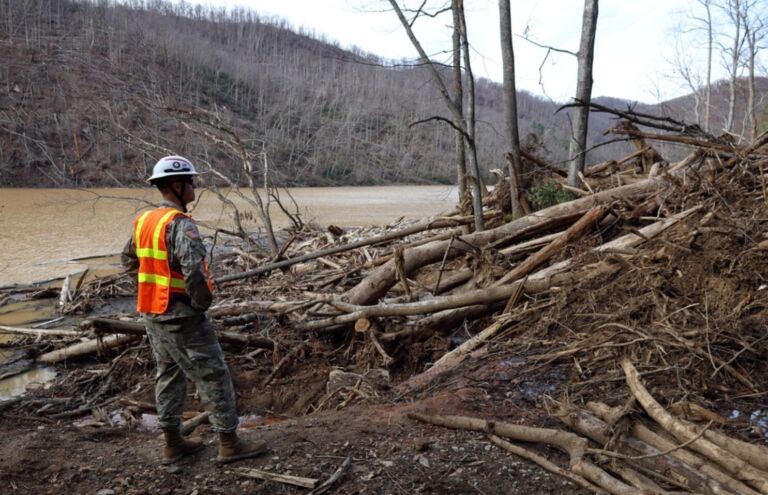
One of the largest awards included approximately $14.5 million for sediment and debris removal efforts in Lake Lure, where floodwaters carried massive amounts of material into the lake from the Broad River during the storm.
Additional funding was approved for transportation infrastructure damaged throughout the region.
The North Carolina Department of Transportation received more than $13.6 million for repairs involving Davis Mountain Road and related infrastructure in Henderson County. Another $2.4 million was approved for repairs to Cedar Creek Road Bridge in Rutherford County, while nearly $1.5 million will support repairs along Rock Creek Road in Yancey County.
Several smaller NCDOT grants will fund culvert replacements, bridge repairs, roadway stabilization, and temporary bridge installations in affected counties.
Municipal governments also received funding for local recovery projects.
Asheville secured nearly $1.9 million for stormwater system repairs and another $1.7 million for roadway repairs. The city also received additional funding for embankment and fencing repairs.
Spruce Pine received more than $1.1 million for sewer line repairs, while Maggie Valley received multiple awards for sewer infrastructure repairs, wastewater treatment facility improvements, levee restoration, and roadway stabilization projects.
Woodfin received more than $1.2 million for culvert replacement projects. Laurel Park secured nearly $1 million for roadway and drainage repairs. Canton received funding for emergency protective measures and temporary relocation costs associated with its fire department.
Electric utilities also received recovery assistance. Mountain Electric Cooperative received more than $4.4 million to restore its Cranberry substation and additional funding to replace damaged electrical poles and power lines, which supply power to the Avery and Watauga county regions.
Blue Ridge Healthcare System received more than $366,000 to support emergency medical staffing and command center operations that were necessary during the immediate response phase following the storm.
One of the most notable mitigation awards announced this week involves property acquisitions in Buncombe County.
FEMA approved more than $29.1 million for the acquisition and demolition of 62 properties damaged by flooding and landslides. Once acquired, the properties will be converted to permanent open space and subject to deed restrictions preventing future development. Several were along the Swannanoa River, a 22-mile-long tributary of the French Broad River. Originating in Black Mountain, the river flows westward before ending its run at a confluence within the Biltmore Estate. Nine of the county’s 43 fatalities from Helene, out of the 107 in the state, were along that river, according to public records.

An additional $647,382 was approved to cover administrative costs associated with managing the buyout program.
The latest funding approvals underscore the scale of Helene’s destruction and the lengthy timeline required for recovery.
“One of the biggest considerations for homeowners is the speed of the buyout. Some studies show that the average FEMA HMGP buyout project takes over five years from the start of the associated disaster to project closeout, although property acquisition typically occurs before a funding program is closed out,” according to a 2024 report from the Congressional Research Service (CRS).
FEMA’s HMGP projects, facilitated in North Carolina by the Department of Public Safety and Emergency Management, reduce future disaster costs by removing structures from high-risk flood zones. CRS highlighted the long-term impact of government-funded buyouts on local tax bases and housing inventories, particularly in areas already facing housing shortages.
“Buyout programs may be controversial, even though they may reduce long-term flood risk,” the report said.
While emergency response operations concluded in October 2024, according to the Office of Cybersecurity, Energy Security, and Emergency Response situation reports, many communities remain engaged in rebuilding projects that will continue for years.
According to Edwards, the newest awards help move the region beyond emergency recovery and toward long-term reconstruction.
“Securing these funds is critical to finally moving from recovery to rebuilding,” Edwards said. “These resources allow us to get to work restoring our roads, rebuilding our bridges, and repairing the infrastructure Western North Carolina depends on every single day to keep communities connected and moving forward.”
The latest round of funding also highlights the federal government’s continuing role in western North Carolina’s recovery effort. Through FEMA’s Public Assistance and HMGP programs, federal taxpayers continue to shoulder the majority of rebuilding costs, with most projects receiving 90% federal reimbursement.
Even with nearly two years of recovery efforts underway, major infrastructure projects remain incomplete across portions of the mountain region. Local governments, utility providers, and state agencies continue navigating a lengthy reimbursement process as reconstruction projects move from emergency stabilization toward permanent repair.
The newly approved funding provides another infusion of federal dollars into that process, bringing hundreds of millions more to communities still rebuilding from one of the most destructive natural disasters in North Carolina history.
“FEMA approves $297M for Helene recovery” was originally published on www.carolinajournal.com.

![[WBT107.9FM] app promo graphics 2025](https://wbt.com/wp-content/uploads/sites/84/2025/12/17653898024341.jpg?quality=80&strip=all&w=150&crop=0,0,100,150px)