NC House Finance advances amendment limiting property tax growth
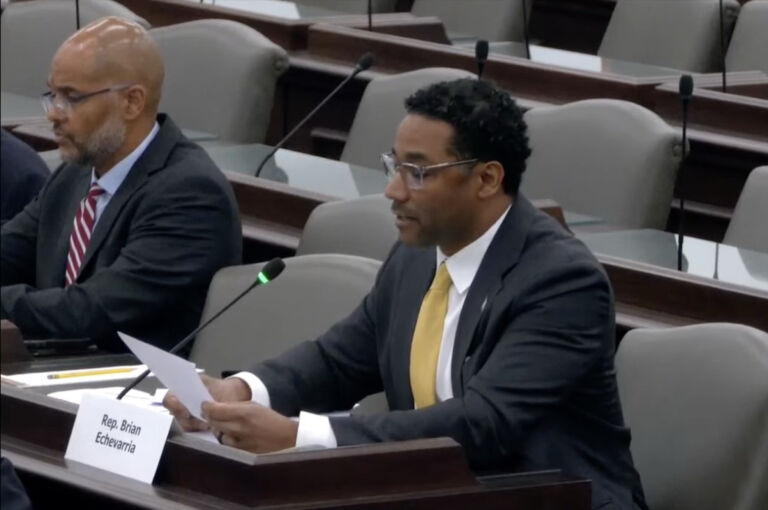
The North Carolina House Finance Committee on Tuesday advanced legislation that would ask voters to amend the state constitution to require limits on local property tax increases, moving a major Republican tax-reform priority one step closer to the 2026 ballot.
House Bill 1089, sponsored by state Reps. Brian Echevarria, R-Cabarrus; Julia Howard, R-Davie; Mitchell Setzer, R-Catawba; and Erin Paré, R-Wake, would require the General Assembly to enact laws limiting how much local property tax levies may increase. The proposal now heads to the House Rules Committee before it can reach the House floor.
“At the will of the voters, [the amendment] would require the General Assembly to establish limits on the growth rate of property tax levies, ensuring that any future increases are deliberate, transparent, and constrained within a defined policy framework that protects homeowners, renters, and business owners,” Echevarria told the committee.
Echevarria said the proposal follows months of work by the House Select Committee on Property Tax Reduction and Reform.
“Over the last five months, the property tax committee has done a lot of listening,” he said. “We heard extensively from staff, stakeholders, and subject matter experts. The resulting debate led to the conclusion that asking the people whether they want a constitutional amendment requiring limits on property tax increases by local governments is the next step toward a modern, fairer, and more predictable property tax system.”
The amendment itself would not set the cap. Instead, it would direct lawmakers to establish the limit later through general law, leaving key details — including the formula, exceptions and whether the cap would be tied to inflation or population growth — for future debate if voters approve the amendment.
Supporters argue the measure is needed after years of rising property tax collections in fast-growing counties. A John Locke Foundation study found property tax revenues in North Carolina’s 10 largest counties exceeded inflation plus population growth by more than $2.6 billion over the past decade.
Critics, including some Democrats and local government advocates, have warned that a statewide levy limit could restrict counties’ and municipalities’ ability to fund schools, public safety, infrastructure and other core services.
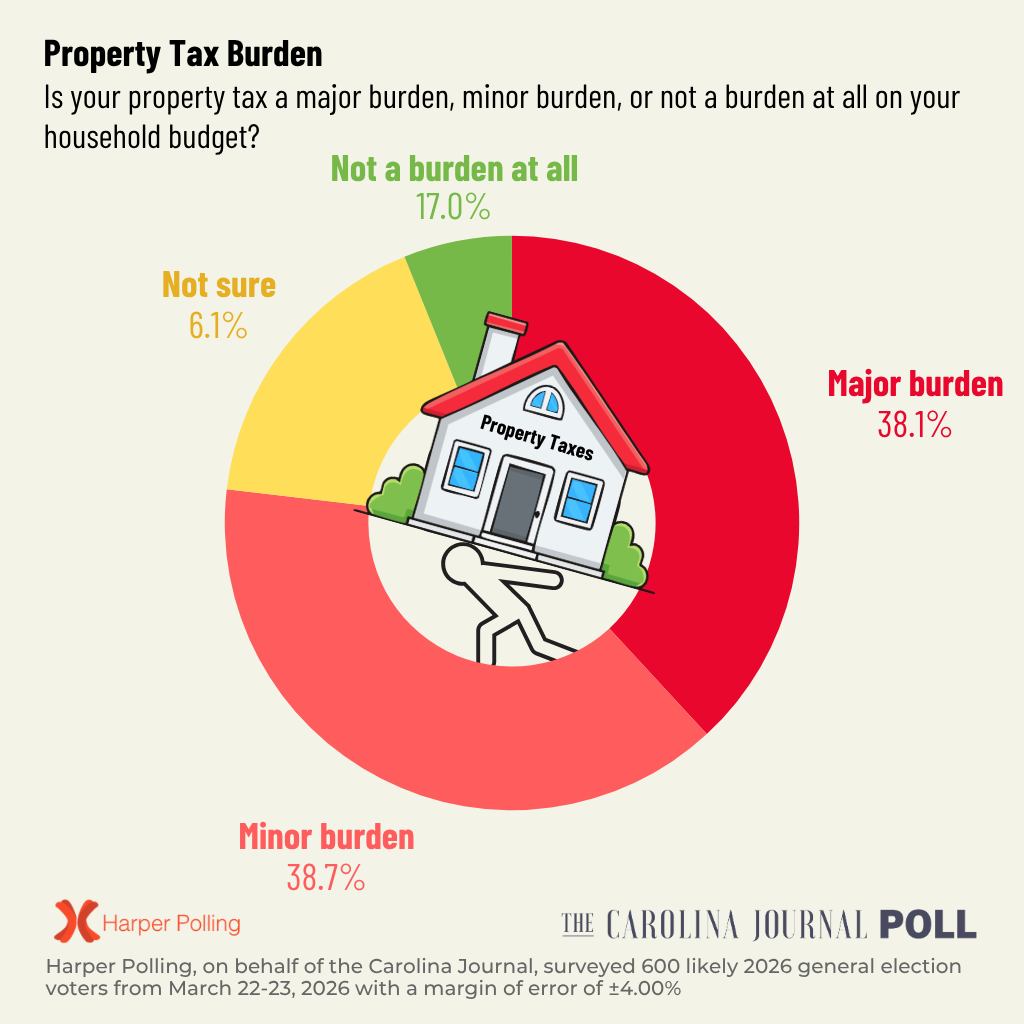
Recent polling suggests public sentiment is increasingly aligned with these concerns. A March Carolina Journal poll found that 76.8% say their property taxes are a burden on their household budget, and 73.2% would support an amendment to the North Carolina Constitution that would require limits on local government property tax increases.
If approved by three-fifths of both the House and Senate, the amendment would appear on the November 2026 statewide ballot. A majority vote of the public would be required for it to become part of the North Carolina Constitution.
A second bill advanced by the committee would update the state’s property tax exemption for nonprofit affordable rental housing, another recommendation from the House Select Committee on Property Tax Reduction and Reform.
House Bill 1042 would create a new exemption framework for affordable rental housing owned by eligible nonprofits or joint ventures, while adding documentation, ownership, affordability and annual compliance requirements.
Supporters have framed the bill as a way to tighten the exemption and ensure it is used for genuinely charitable, affordable housing purposes. The bill would require more than half of a development’s units to qualify as affordable, generally serving tenants at or below 80% of the area median income. It would also reduce the period during which property held for a future housing site can remain exempt from 10 to 5 years.
Together, HB 1089 and HB 1042 represent the House’s two-track property tax package for the 2026 legislative short session: one proposal aimed at limiting future growth in local property tax collections and another aimed at narrowing and clarifying exemptions that can affect local tax bases.
“NC House Finance advances amendment limiting property tax growth” was originally published on www.carolinajournal.com.

![[WBT107.9FM] app promo graphics 2025](https://wbt.com/wp-content/uploads/sites/84/2025/12/17653898024341.jpg?quality=80&strip=all&w=150&crop=0,0,100,150px)