Court wrestles with First Amendment rights and law enforcement video
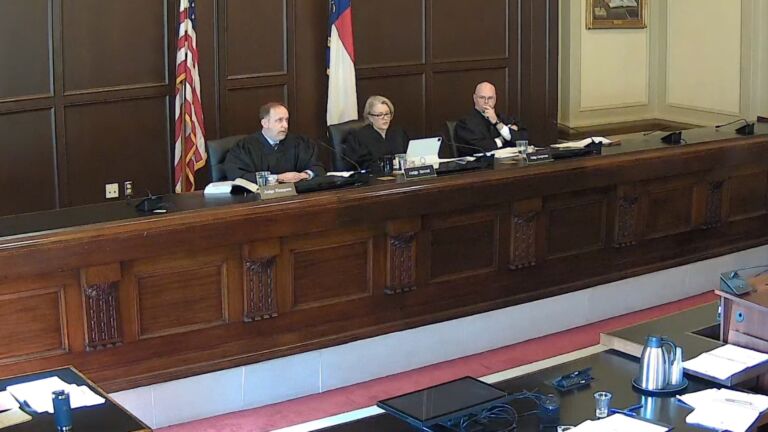
North Carolina’s second-highest court must decide whether a trial judge violated a woman’s First Amendment rights when he limited her ability to share law enforcement videos with the public. The videos were tied to a state trooper’s fatal shooting of the woman’s dogs in 2024.
All three members of a state Court of Appeals panel expressed skepticism during oral arguments Wednesday that the trial judge abused his discretion in the case Nikac v. Pitt County Sheriff.
The case stems from an October 2024 incident in Washington. A man broke into Lydia Nikac’s car on her property. Nikac, a professional dog trainer, called 911 to report the car break-in. Then she confronted the man with the help of her dogs Bonnie and Clyde.
By the time a State Highway Patrol trooper responded to the property, the dogs had the suspect cornered. Nikac asked the trooper to stay off her property until she called off the dogs. Instead the trooper approached the scene and eventually shot both dogs, according to court filings.
Eighteen days after the incident, Nikac filed a petition to access custodial law enforcement agency recordings from the trooper’s vehicle and from Pitt County deputies who arrived on the scene after the shooting.
During hearings in December 2024 and January 2025, Nikac indicated that she might seek to use the videos for her dog training work. She also indicated she might want to share the videos while raising public awareness about the shooting incident.
Superior Court Judge Matthew Houston issued a February 2025 ruling that the law enforcement agencies should release recordings to Nikac and her lawyer for use in preparing for legal proceedings. Houston’s order limited Nikac from releasing the videos to any third parties.
Houston’s limitations prompted Nikac to appeal.
“We are contending that this violates her First Amendment right to free expression and also that the lower court’s order is not in accordance with the North Carolina statute on the release of the bodycam video,” argued John Kirby, Nikac’s lawyer.
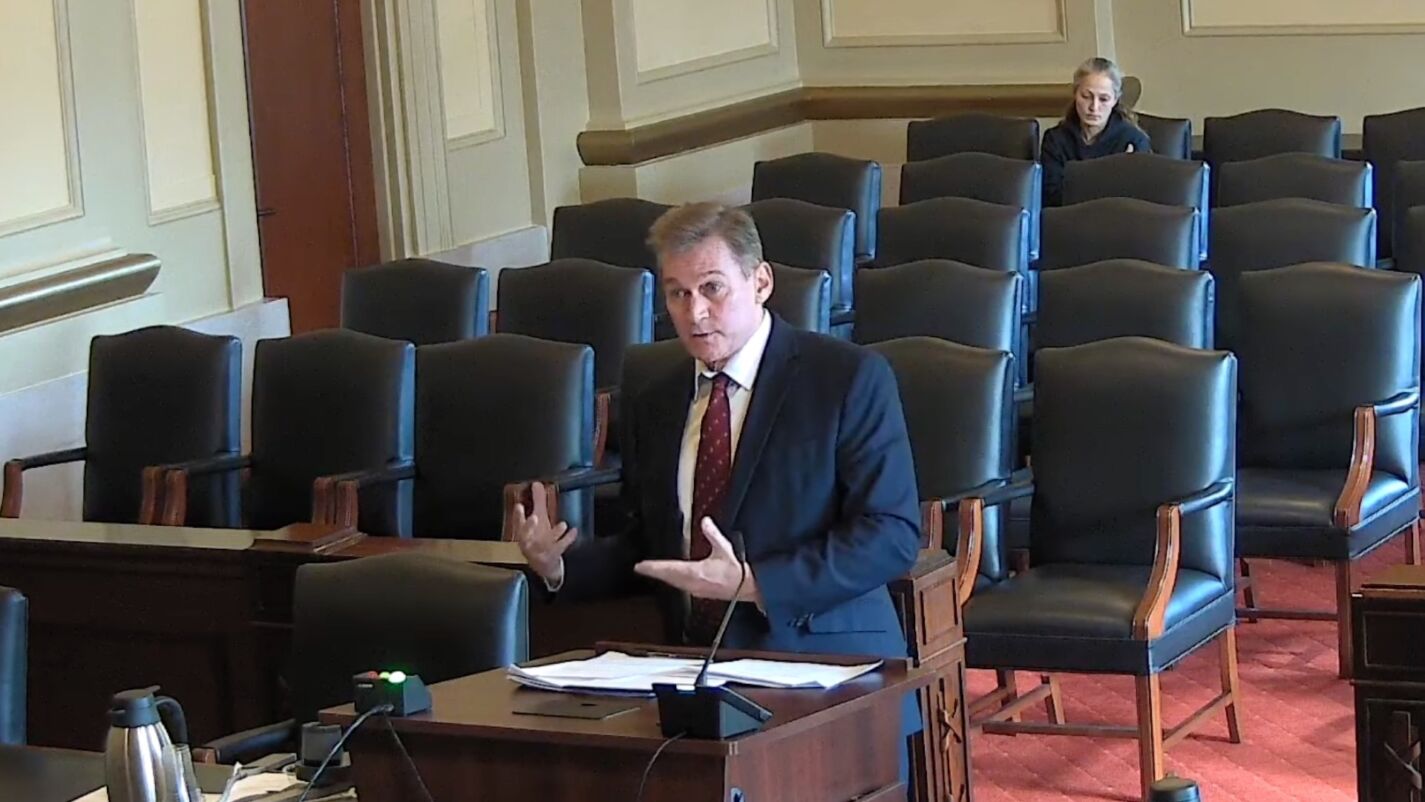
Kirby highlighted what he called a “fundamentally flawed” view of Nikac’s First Amendment rights. “Under the First Amendment, speech is not just my ability to stand here and talk to you,” he argued. “Under the clearly established cases — we’ve cited several — speech includes the right to publish and post videos and recordings and pictures.”
Houston had authority to limit Nikac’s use of the video, Kirby admitted. But the judge should have spelled out the reasoning for those limits more clearly. “There does have to be some kind of finding of fact that goes beyond more than just a recitation of the language of the statute.”
The law enforcement agencies presented a different take on the dispute.
“CLEAR records are confidential, and the court has very wide latitude in how it authorizes the releases and access to those records,” argued state Senior Deputy Attorney General Olga Vysotskaya de Brito, representing the State Highway Patrol.
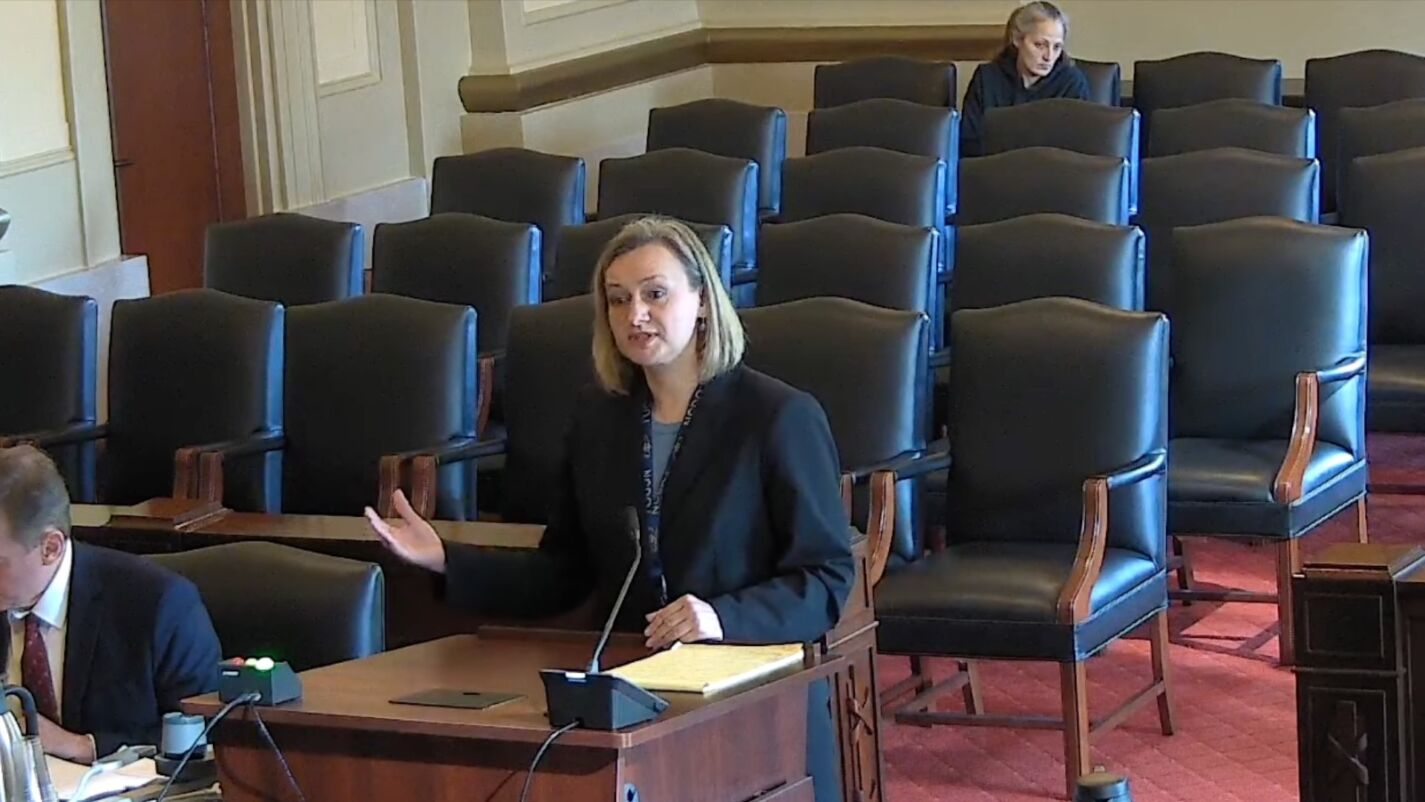
“Petitioner failed to show that Judge Houston’s order abused dissection,” Vysotskaya de Brito added. “The order itself is well-supported by appropriate government interests, and it’s also supported by record evidence.”
“Petitioner does not have First Amendment rights to disobey the trial court order,” she said. “Petitioner does not have First Amendment rights to publish CLEAR material, which the legislature has rendered confidential.”
Appeals Court Judges Donna Stroud, Tobias Hampson, and Jeff Carpenter all noted during the arguments that Houston’s order addressed Nikac’s original petition for access to the videos.
“Just as far as the petition … the phrasing I think it was for legal purposes or whatever that she wanted to use it under the statute,” Stroud said. “She got that. I mean: The court gave her the thing that she asked for.”
“She says she needs the recordings to determine legal issues,” Carpenter added. “That’s exactly what Judge Houston gave her. … He said you can have the videos, but it’s limited for these purposes just like you asked for in your petition.”
The order “didn’t foreclose that it might not broaden at some point in the future if there was another need,” Carpenter added. “I’m trying to wrap my head around how a judge giving a petitioner exactly what they asked for abused the discretion of the judge, especially in light of the language of the statute that says that the judge can place whatever restrictions on the release of the recording that the court deems appropriate in its discretion.”
Hampson noted that the trial court left open the prospect that the recordings could be released more broadly “with further judicial authorization.”
“It leaves open the possibility that if your client believes there’s a reason to disseminate it, there is the opportunity to go back to court,” Hampson said. “It doesn’t permanently preclude release of this necessarily.”
“Again, our position is that there really should be no limitation on the use of the video and that no limitation was warranted,” Kirby replied.
“Basically, their First Amendment theory is this: Once I have these materials in my possession, it does not matter what the court says concerning these materials. I get the First Amendment right to disobey the court order and disseminate these materials as I want,” Vysotskaya de Brito argued.
“Court wrestles with First Amendment rights and law enforcement video” was originally published on www.carolinajournal.com.

![[WBT107.9FM] app promo graphics 2025](https://wbt.com/wp-content/uploads/sites/84/2025/12/17653898024341.jpg?quality=80&strip=all&w=150&crop=0,0,100,150px)

