TSA staff shortages put pressure on NC airports
The Department of Homeland Security (DHS) shutdown is continuing into late March. Because of this, staffing shortages at the Transportation Security Administration (TSA) are beginning to negatively affect airports nationwide. Now reports suggest some smaller North Carolina airports may not be able to continue operating.
The shutdown, caused by conflict over immigration policy and DHS funding, has left TSA officers working for weeks without pay. This impact is beginning to translate across the country. Airports are reporting longer wait times, fewer screening lanes, and rising absentee rates among airline workers.
National coverage shows the situation is intensifying. Airports across the US have experienced wait times from two to five hours during peak travel hours, as TSA staff shortages limit screening capacity.
Federal officials have also explained how the consequences from the shutdown could go beyond delays. Current TSA leadership has indicated that if staffing shortages continue, smaller airports could temporarily pause operation.
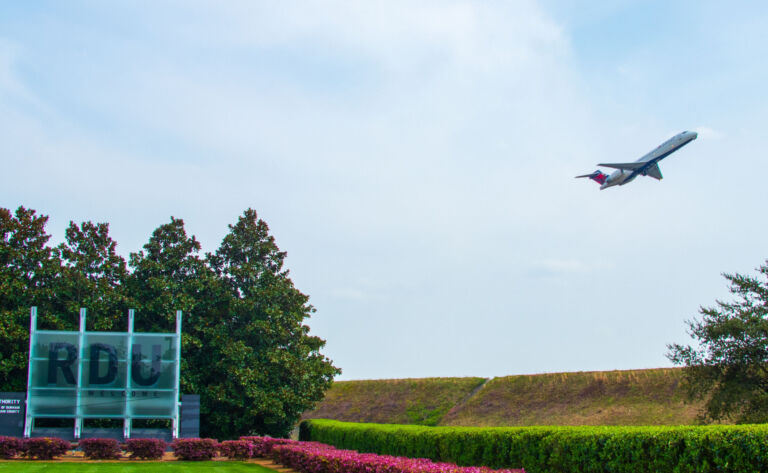
The effects on North Carolina airports are intensifying. Charlotte Douglas International Airport (CLT), one of the largest airports in the country, already has signs of tension because of reduced staffing. Raleigh-Durham International Airport (RDU) has remained pretty stable, though airport personnel recommend travelers arrive at least two hours earlier.
The struggle for TSA workers has encouraged community support across the country. Asheville Regional Airport officials have encouraged travelers to support TSA officers working without pay by donating items such as grocery and gas gift cards through a post on Instagram. A similar message was shared by RDU, where officials noted in a recent post that TSA employees remain on duty without pay and outlined how travelers can drop off gift cards at TSA supervisor podiums in both terminals. These efforts reflect the financial pressure facing federal workers and the increasing reliance on public support during the DHS shutdown.
Elon Musk said in a March 21 post on X that he would be willing to help cover TSA workers’ salaries during the shutdown.
“I would like to offer to pay the salaries of TSA personnel during this funding impasse that is negatively affecting the lives of so many Americans at airports throughout the country,” Musk wrote.
US Rep. Mark Harris, R-NC8, criticized Democrats in a recent post on X, writing, “Dealing with long lines at the airport? Thank a Democrat! Chuck Schumer and Senate Democrats continue to refuse to fund DHS, and now Americans are dealing with the consequences of their actions.”
Smaller regional airports across the state are at greater risk, with concerns being raised at the federal level. Sean Duffy said in an interview to CNBC that if the shutdown continues, smaller airports could begin to shut down as TSA officers miss more paychecks.
“You’re going to see small airports, I believe, shut down,” Duffy stated. “You’re going to see extensive lines.”
While Duffy did not say which airports could be affected, the Federal Aviation Administration classifies 74 airports nationwide as small hubs, handling between 0.05% and 0.25% of annual US passenger boardings and categories that include several regional airports in North Carolina.
Asheville Regional Airport, Piedmont Triad International Airport, and Wilmington International Airport are all classified as small hub airports. These airports already have fewer TSA officials and less flexibility, making them more vulnerable.
Because federal law requires TSA screening for commercial flights, a lack of officers could prevent these airports from maintaining normal operations.
State aviation officials are now being asked whether contingency plans exist if staffing numbers fall even more, and whether smaller airports could face service reductions or temporary closures if the shutdown continues.
Smaller airports can be more at risk because they lack the staffing depth of larger airports. While major airports can sometimes consolidate checkpoints or reallocate staff, regional airports often operate with minimal staff, which leaves little room for call outs.
The situation is further complicated by the fact that TSA officers perform specialized security functions that cannot easily be replaced. While federal agencies have explored deploying additional personnel to assist with non screening roles, those workers are not trained to conduct passenger or baggage screening. This means the solution is not simply a matter of reallocating staff but likely requires maintaining a fully staffed TSA workforce.
For now, North Carolina travelers are being urged to plan ahead and allow extra time at the airport.
“TSA staff shortages put pressure on NC airports” was originally published on www.carolinajournal.com.
![[WBT107.9FM] app promo graphics 2025](https://wbt.com/wp-content/uploads/sites/84/2025/12/17653898024341.jpg?quality=80&strip=all&w=150&crop=0,0,100,150px)


