Report alleges solitary confinement use in NC juvenile detention
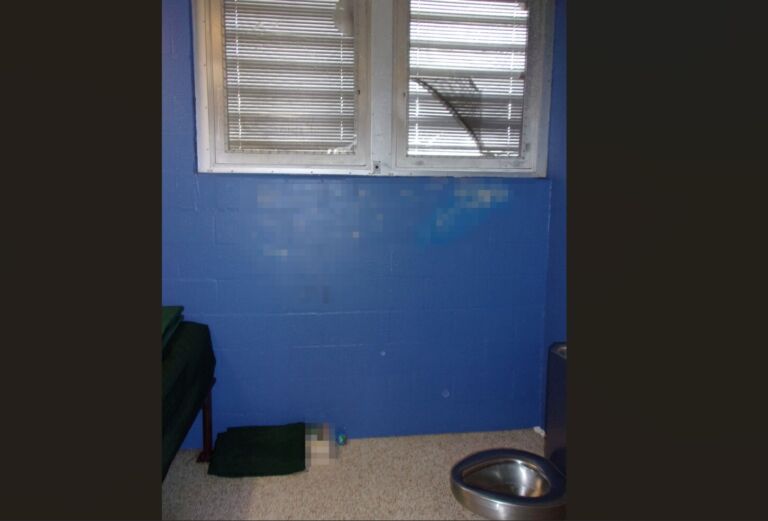
A new report alleging that teens in several North Carolina juvenile detention centers are routinely confined to their cells for more than 22 hours a day, has sparked a pointed dispute between advocates and state officials over conditions inside the state’s juvenile justice system.
Earlier this month, Disability Rights North Carolina (DRNC) released a 52-page report summarizing a year-long review of 13 juvenile detention centers in the state, including three county-operated facilities overseen by the North Carolina Department of Public Safety (NCDPS) Division of Juvenile Justice and Delinquency Prevention (JJDP).
The report is based on visits that began in July 2024 and interviews with 398 detained youth. DRNC alleged that youth described being locked in their rooms for long lengths of time in multiple facilities, conditions the organization characterizes as solitary confinement.
In a follow-up statement to Carolina Journal, DRNC supervising attorney Cari Carson rejected the state’s assertion that solitary confinement is not used in juvenile facilities.
“The state’s claim that solitary confinement is not used in the state’s juvenile justice settings is unfortunately not supported by interviews with youth in multiple facilities,” Carson said. “Solitary confinement is being used in several of North Carolina’s juvenile detention centers.”
Carson said that in individual interviews, multiple youths in both state- and county-operated facilities reported being confined for more than 22 hours per day and described the mental toll of those conditions. In some facilities, DRNC monitors observed youth locked in cells during daytime hours. In others, teens reported isolation being used as discipline for hours or days.
“The devastating consequences of solitary confinement on youth are well-known, and solitary confinement does not make facilities or communities safer,” Carson said. “Solitary confinement, by any name, must be banned in every juvenile justice facility in North Carolina.”
Carson added that if the juvenile justice system is to meet its rehabilitative mission as intended by the General Assembly, then detention centers must ensure meaningful access to education, recreation, and therapeutic programming outside of cells.
“We must operate juvenile detention centers always keeping in mind the primary goal — to equip youth to succeed when they rejoin the community,” she said.
DRNC said it plans to continue monitoring facilities and advocating for reforms.
State officials push back
NCDPS officials dispute that solitary confinement is practiced in the state’s juvenile facilities and say they are reviewing the report.
In a statement to Carolina Journal, JJDP Communications Officer Matt Debnam said the division is examining the findings and recommendations.
“The Department of Public Safety’s Division of Juvenile Justice and Delinquency Prevention is currently reviewing the report from Disability Rights NC,” Debnam said.
Prior to the report’s publication, Deputy Secretary William Lassiter sent a preliminary response letter outlining what he described as potential solutions and additional resources needed to address concerns.
Those proposals include:
- Salary increases for frontline facility staff and compression relief for supervisors to improve recruitment and retention.
- Funding to complete the construction of a new 48-bed juvenile detention center. The General Assembly has already appropriated $1 million for initial planning.
- Funding for 13 additional maintenance personnel and equipment.
- Creation of a 20-bed medical and mental health crisis unit.
- Inflationary increases and expanded support for community-based alternatives to detention.
Lassiter has previously stated that while room confinement may occur when a youth’s behavior threatens safety, solitary confinement is not practiced in North Carolina’s juvenile justice settings. Division policy, he has said, requires monitoring by facility leadership and behavioral health staff and continued access to education and medical care.
Growing pressures on the system
Data presented by JJDP leadership to the Justice and Public Safety Oversight Committee in December showed a system facing increasing demands.
In 2024, there were 3,036 detention center admissions statewide. The system maintains 445 detention beds, including county facilities, but only 401 are currently staffed for operation. Staffing challenges at facilities in Rockingham, Richmond, Dillon, and the county-operated Durham center have left 44 beds offline while other facilities operate over capacity.
The average daily detention population has increased 44% since January 2022, according to figures presented to lawmakers.
On Dec. 1, 2025, 63% of the juvenile detention population consisted of youth charged in the adult system, up from 38% one year earlier. Stays for youth in the adult system ranged from one day to 362 days.
At the same time, 38% of youth assessed in 2024 were identified as having mental health needs based on Youth Assessment and Screening Instrument data.
Recidivism data from the North Carolina Sentencing and Policy Advisory Commission show a 15% recidivism rate during juvenile justice involvement, 32% within two years post-release, and 39% across either period for the FY 2022 sample.
Juvenile complaints have also climbed. In calendar year 2024, 40,433 complaints were received involving 14,189 distinct juveniles.
Division officials report that 93% of middle and high school courses taken by confined youth are completed successfully. Beyond detention centers, 24,477 youth were served in 2024 through Juvenile Crime Prevention Council programs statewide, which provide mentoring, counseling, tutoring, and other court-ordered services.
JJDP leaders have also highlighted firearm access among youth as a significant public safety concern. Citing data from the Bureau of Alcohol, Tobacco, Firearms and Explosives, the division reported that 10,876 firearms were stolen annually from private North Carolina citizens between 2019 and 2024. National research indicates that 80% of individuals involved in K-12 school shootings obtained firearms from family members.
Through the NC S.A.F.E. campaign, established in 2023, state officials are promoting secure firearm storage and distributing gun locks across the state.
Despite agreement that the system faces staffing shortages and capacity pressures, advocates and state leaders remain divided over the use and frequency of isolation inside detention centers.
DRNC said that prolonged confinement is occurring and must be eliminated. State officials maintain that solitary confinement is not practiced and that temporary room confinement is used only when necessary for safety, under policy safeguards.
For advocates like Carson, the issue is fundamental. “If we expect our juvenile justice facilities to give youth a chance at rehabilitation,” she said, “then we must make sure we get our intended outcomes.”
“Report alleges solitary confinement use in NC juvenile detention” was originally published on www.carolinajournal.com.

![[WBT107.9FM] app promo graphics 2025](https://wbt.com/wp-content/uploads/sites/84/2025/12/17653898024341.jpg?quality=80&strip=all&w=150&crop=0,0,100,150px)
