2025 film, TV productions spend $185.5M in NC
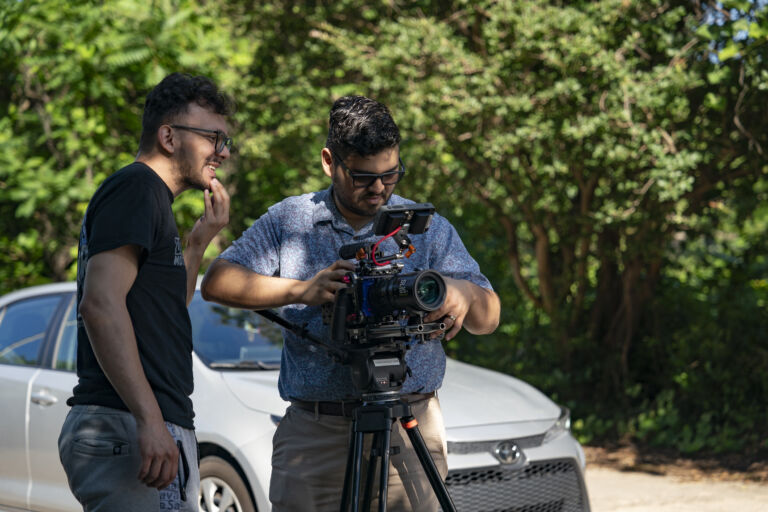
In 2025, the film and TV production industry spent an estimated $185.5 million in direct in-state spending in North Carolina. This is the fourth-highest year-end total since the North Carolina Film and Entertainment Grant Program went into effect in 2015, and the expenditure reflects investments that include: feature films, streaming and television series, reality programs, commercials, and independent projects.
“Film production is important to North Carolina, generating economic activity and supporting more than 7,000 jobs across the state last year,” Gov. Josh Stein said in a press release. “Producers know when they choose North Carolina, they’ll find a supportive environment with an experienced workforce that understands and meets their needs.”
Thirty-eight productions were filmed across 45 counties, creating more than 7,000 jobs for crew, talent, and background extras.
Some highlights include:
- Season 2 of “Beast Games”
- Season 23 of “Top Chef”
- Season 2 of “Blue Ridge: The Series”
- Season 2 of “The Hunting Wives”
- Pilot and Season 1 of “RJ Decker”
- “Bad Counselors”
- “Drivers Ed”
- “May and the Woodsman”
- “The Bard”
- “Widow”
“Times have changed; Never before have we had access to a virtually unlimited audience like we do today through YouTube and other social media platforms,” Rene Olmos, video producer for State Policy Network, told the Carolina Journal. “That reality became especially clear to me while working with MrBeast on a Feastables commercial. He started as an independent creator and rose to the highest levels of entertainment without Hollywood.”
While MrBeast, a Greenville native named Jimmy Donaldson, built his brand organically, without state incentives or money from Hollywood, he did receive a $15 million grant for Season 2 of “Beast Games” under the NC Film and Entertainment Grant program.
National commercials and brand collaboration for Food Lion, AutoZone, and Mac Trucks were also shot in North Carolina. Local projects filmed in North Carolina include the features “Long Drive to Yadkin,” “Pretty Ugly,”“A Good Fight,” and “Venus: The Fibonacci Sequence,” and parts of the latest season of “Military Makeover with Montel.”
“North Carolina’s film and television industry has evolved into a dynamic, year-round economic driver,” Guy Gaster, director of the North Carolina Film Office, said in a press release. “Our incentive program, combined with a skilled local workforce and unmatched geographic diversity, continues to attract productions that deliver jobs and investment statewide. As we look back on 2025 and forward into 2026, North Carolina remains highly competitive in the global production marketplace.”
In years prior to 2025, multiple projects filmed in North Carolina debuted in theaters or on streaming services, including “The Waterfront,” “The Runarounds,” “Roofman,” “Christy,” “Merv,” “A Little Prayer,” Season 1 of “The Hunting Wives,” and Season 3 of “The Summer I Turned Pretty.”
Some free market economists, though, don’t believe even the scaled back grant program is necessary, making the case the state would attract projects regardless.
“North Carolina is a great destination for business; there’s no need to put taxpayers on the hook to pad the bottom line of Hollywood film studios,” Brian Balfour, VP of research at the John Locke Foundation, told the Carolina Journal. “Research has shown that states engaging in film incentives get a negative return, meaning the programs are a net loser for taxpayers. North Carolina should end this targeted incentive and instead work toward reducing taxes on all North Carolina workers and businesses without playing political favorites.”
2026 production projects include continuing production of “RJ Decker,” Season 2 of “The Hunting Wives,” and “A Grand Biltmore Christmas.”
The North Carolina Film and Entertainment Grant is a film incentive administered by the NC Department of Commerce, designed to attract feature-length films and TV/streaming productions to grow the state’s economy and create jobs. Production companies do not receive money up front. They must meet direct in-state spending requirements to qualify for grant funds, which are paid as a rebate after the project is completed and the production’s spending is successfully audited.
“Eleven projects that were pre-approved for rebates from the state’s film grant program had production-related activities in 2025, resulting in an estimated direct in-state spend in excess of $179 million,” reads the press release.
“North Carolina was a popular film location long before it had film grants,” Jon Sanders, director of the Center for Food, Power and Life at the John Locke Foundation, told the Carolina Journal. “We offer a wide range of locations, lots of local talent and experience, and competitive wages and local prices. The film industry here is a thriving, homegrown product, and of course, it’s always nice to see Tar Heel views on screen. But even though we have a film grant program, it’s not the reason we have a film industry, and research as well as North Carolina’s history shows that filmmakers come here naturally, not because they’re chasing government giveaways.”
“2025 film, TV productions spend $185.5M in NC” was originally published on www.carolinajournal.com.

![[WBT107.9FM] app promo graphics 2025](https://wbt.com/wp-content/uploads/sites/84/2025/12/17653898024341.jpg?quality=80&strip=all&w=150&crop=0,0,100,150px)

